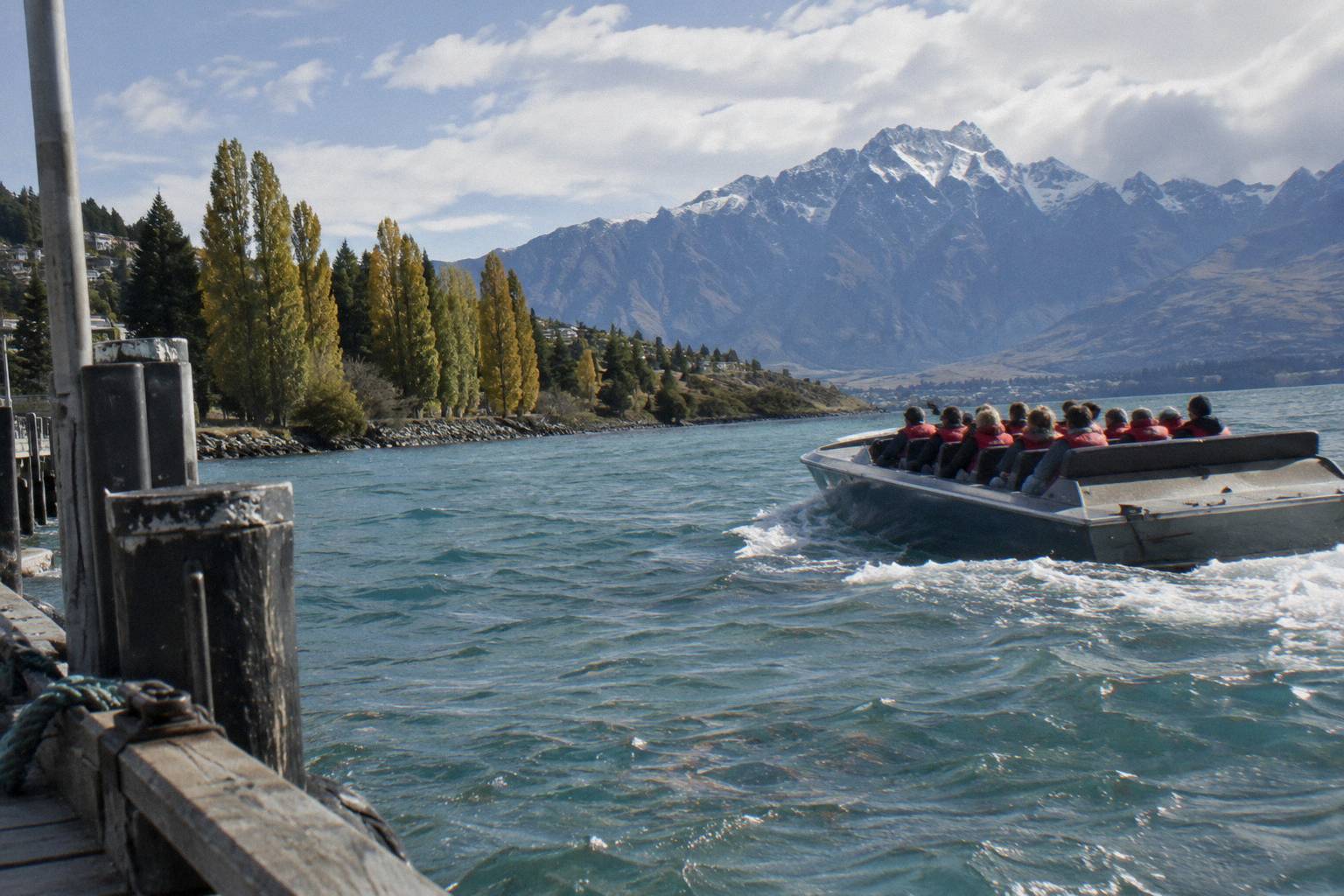
Does A KJet Ride Run In Rain Or Winter?
KJet runs 365 days a year, weather permitting, and the booking page says rides operate rain or shine. Here is what that means for a winter or wet-day booking in Queenstown.
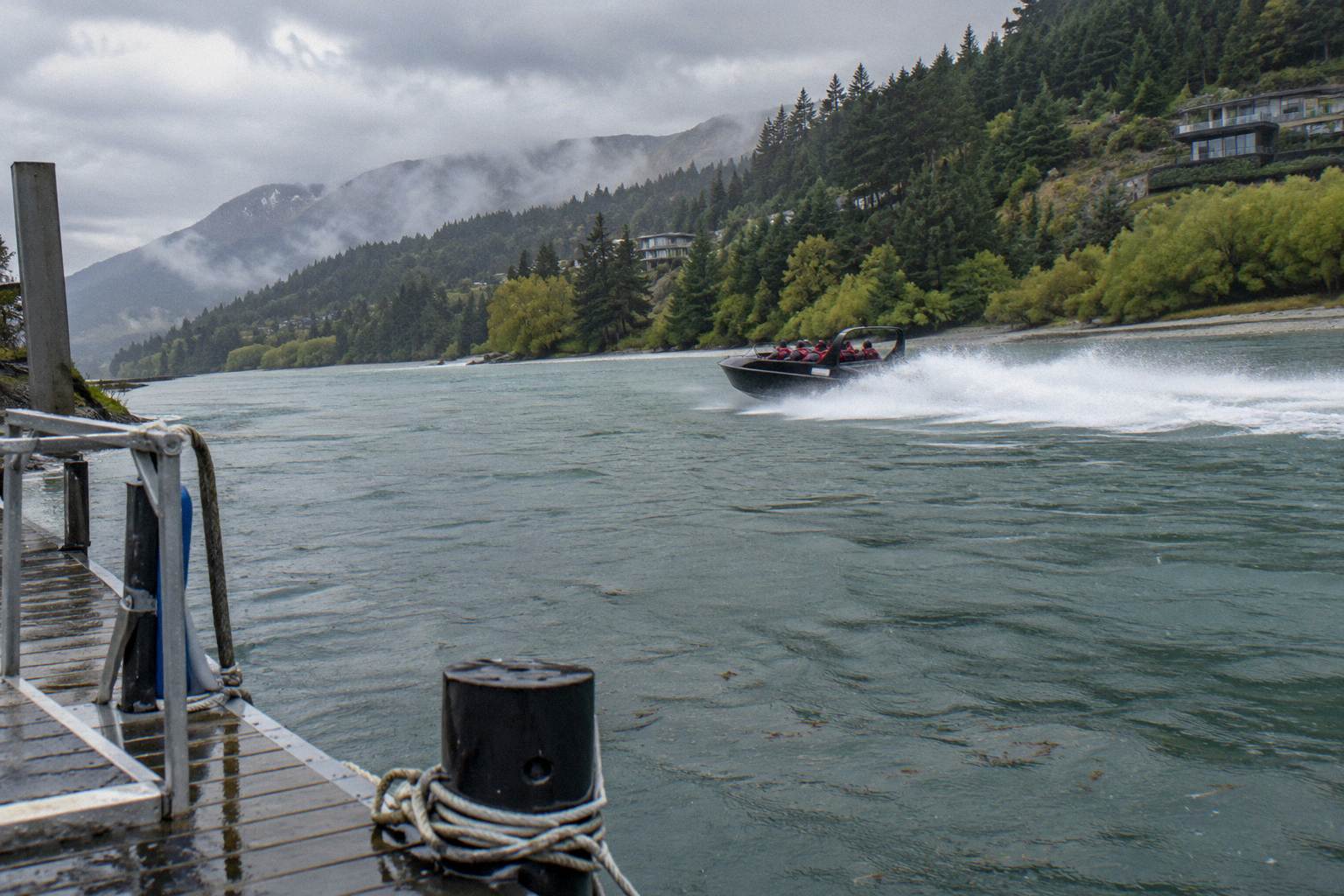
Yes on both counts, with one caveat. KJet says its boats leave every hour on the hour from 10am to 6pm, 365 days a year, weather permitting, and the booking page states the ride operates rain or shine. Rain alone does not stop a departure. Winter does not either. The caveat is that KJet may still cancel or amend a trip for weather or unforeseen circumstances, and when it does, it offers a rebook or a full refund.
That single sentence carries most of what a weather-worried booker needs, but the detail around it matters. Queenstown's winter is a real winter, not a mild shoulder season: NIWA records at Queenstown Airport put the mean daily maximum at 8.2 °C in July, with a mean daily minimum of -1.4 °C. The town also sits beside a lake and a river, so wind and spray on the water feel sharper than the same numbers on a sheltered street. None of that closes the ride. It just changes what you wear and how you plan the day.
The distinction between "rain or shine" and "weather permitting" is worth understanding before you pay. Ordinary rain, overcast skies and cold temperatures fall under rain or shine: the boat goes out and you get the same hour on the water. Weather permitting covers the rarer cases where conditions on the lake or river make a departure unsafe or impractical, and the decision sits with the operator. KJet's terms say it may cancel or amend for weather or unforeseen circumstances and then offers rebooking or a full refund, so a weather cancellation does not cost you your money, only your slot. For a fuller walk-through of that process, see what actually happens when weather cancels a KJet ride.
If you are choosing between a wet summer afternoon and a crisp blue winter morning, both are viable rides. The sections below set out the climate numbers, the clothing logic for cold months, the cancellation rules in plain language, and how the other departure facts fit together, so you can decide whether to book now or wait for the forecast.
How Cold Does A Queenstown Winter Actually Get?
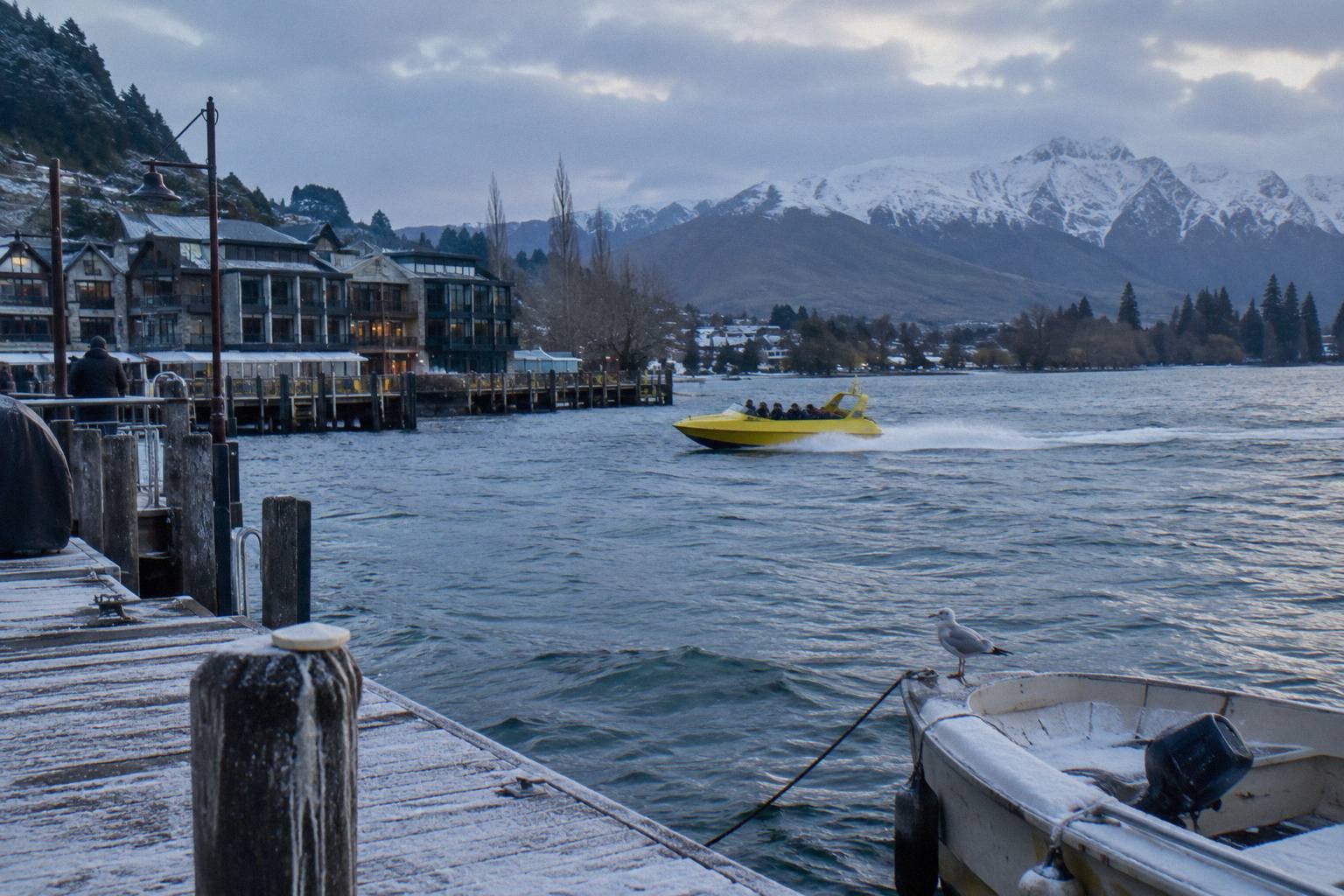
Cold enough to plan for, not cold enough to change your booking. NIWA records at Queenstown Airport show a mean daily maximum of 8.6 °C in June, 8.2 °C in July and 10.2 °C in August, with mean daily minimums of -0.4 °C, -1.4 °C and 0.2 °C. Rain falls on about 96 days a year, totalling 721 mm, so rain is routine rather than exceptional in every season.
These are station normals measured at the airport across the 1991 to 2020 period, not river conditions, and that matters for how you read them. A mean daily maximum of 8.2 °C in July means a typical July afternoon high sits near 8 °C, with colder mornings and the occasional day either side of that. The river corridor can hold a chill the town streets do not, because boat speed adds its own wind chill on top. Riders who dress for a ski day generally report comfortable trips; riders who dress for an autumn walk often wish they had not.
- Thunder Jet 30-Minute RideNZ$119
- KJet 60-Minute RideNZ$159
- Thunder Jet 1-Hour RideNZ$159
Summer riders get a different set of numbers. January averages a daily maximum of 22.0 °C and a minimum of 9.9 °C, with 236.9 sunshine hours across the month, and December holds the longest days at a mean 15.6 hours of daylight. Daylight averages 8.8 hours in June and 9.2 in July, against that December figure, which shapes how the departure times feel in each season. The shoulder months sit between the two: April's mean daily maximum is 15.2 °C, October's is 15.4 °C, and both carry more changeable weather than either end of the year. The table below lays out the winter half of the year so you can see the slide into cold and the climb back out.
| Month | Mean daily max | Mean daily min | Sunshine hours |
|---|---|---|---|
| April | 15.2 °C | 4.5 °C | 136.2 |
| May | 11.9 °C | 2.3 °C | 83.8 |
| June | 8.6 °C | -0.4 °C | 69.3 |
| July | 8.2 °C | -1.4 °C | 85.2 |
| August | 10.2 °C | 0.2 °C | 119.5 |
| September | 13.0 °C | 2.4 °C | 151.0 |
One planning note follows directly from the daylight figures. With KJet's last departure at 6pm and only about nine hours of midwinter daylight, the later departures in June and July run in fading or artificial light. That is not a problem, and some riders like the evening atmosphere on the lake, but if a bright view of the Remarkables is part of what you want from the hour, book a late-morning or early-afternoon slot. For a deeper look at the trade-offs across the day, the guide on choosing a departure time for a KJet ride works through them in order.
What Should You Wear On A Winter Jet Boat Ride?
Layers, a real waterproof jacket, closed shoes, and in winter a hat and gloves, with sunglasses or goggles. KJet does not provide spray jackets, so bring your own waterproof or buy an eco-poncho at the base. Life jackets are supplied. The winter boats have heated handrails, which the KJet FAQ names as its answer to cold hands, and sunscreen still matters because UV reflects off the water.
The single most useful fact in that list is the spray jacket one, because it surprises people. Many boat operators hand out waterproof shells as a matter of course; KJet does not, and its FAQ says so plainly. If you own a decent rain jacket, bring it. If you do not, the base sells an eco-poncho, which solves the problem without buying gear for one hour. Everything else on the list is ordinary cold-weather sense: a warm mid-layer under the jacket, a hat that fits under the life jacket, gloves thin enough to grip the handrail, and closed shoes rather than sandals.
Winter adds two small items most visitors underestimate. The first is eye protection: the KJet FAQ recommends sunglasses or goggles in winter, because low sun, glare off the water and the wind of a moving boat make squinting the default. The second is sunscreen, which sounds absurd at 8 °C but is standard advice around southern lakes, where reflected UV does the damage while the cold hides it. Cameras and phones must be stored while the boat is moving, so winter gloves and phone photography do not mix well anyway; hands-free mounted action cameras are the only exception, and selfie sticks are not allowed.
| Item | KJet's stated position |
|---|---|
| Life jacket | Provided, sizes to 4XL |
| Spray jacket | Not provided; bring a waterproof or buy an eco-poncho at the base |
| Winter extras | Hat, gloves, sunglasses or goggles, sunscreen, closed shoes |
| Cold hands | Heated handrails on the boats in winter |
| Staying drier | Centre seats are drier, but seating cannot be guaranteed |
| Photos | Hands-free mounted action cameras only; no selfie sticks |
The clothing picture, including the drier-seat question and what to do about spectacles, is covered in full in what to wear on a jet boat ride in Queenstown, and the seasonal side of it is expanded in the winter jet boating guide for the Kawarau. The short version: dress like you are going snowboarding for an hour, not like you are going shopping.
When Can Weather Actually Cancel A KJet Ride?
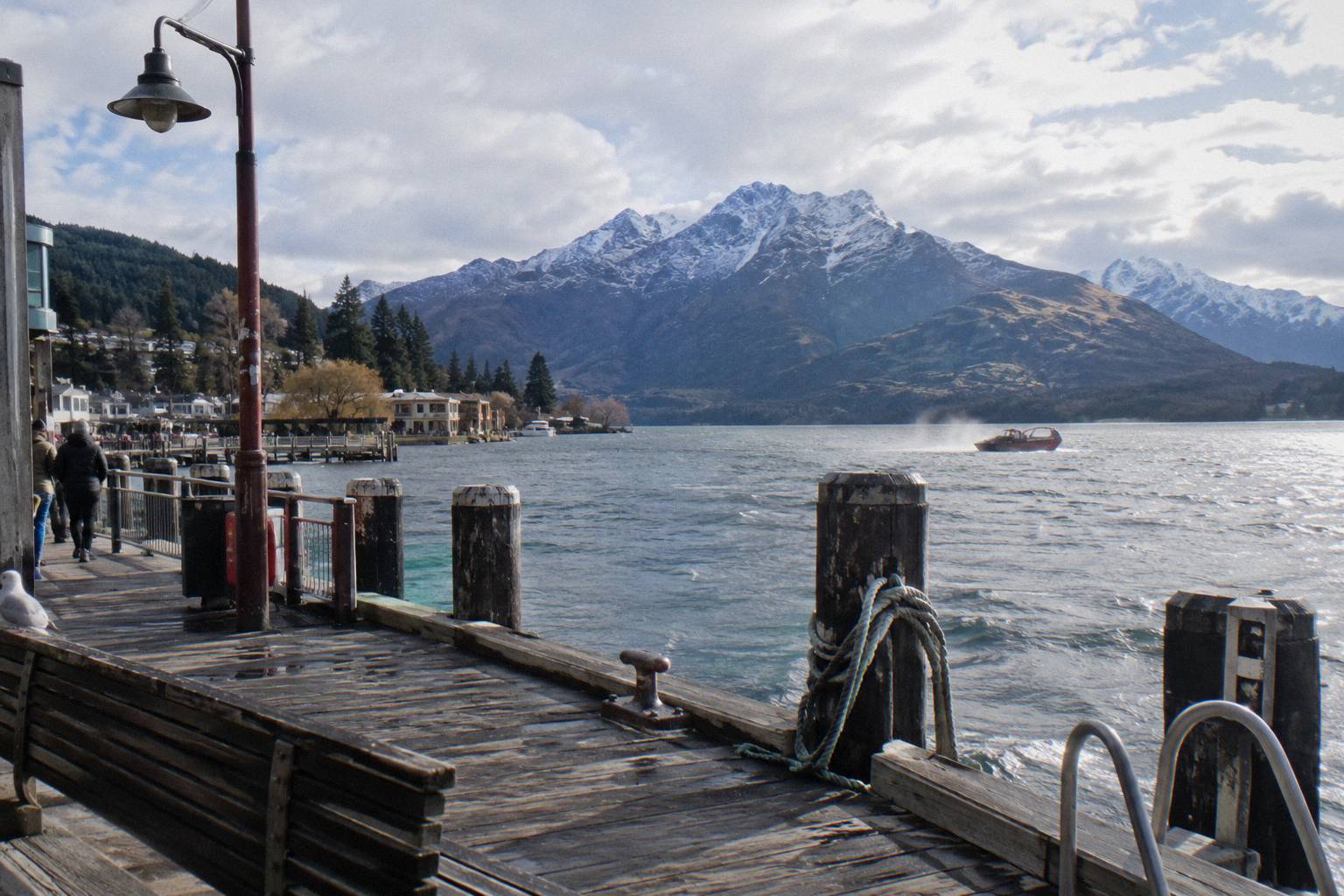
When KJet judges the conditions unsafe or impractical to run, and only then. Its terms say the company may cancel or amend a trip for weather or unforeseen circumstances, and in that case offers a rebooking or a full refund. The operator does not give a river-level, flood or wind trigger, so check the booking page for current conditions before you go.
The mechanics of that process are straightforward. If KJet cancels, you are offered a rebook onto another hourly departure or a full refund, so a weather cancellation costs you time rather than money. Ordinary rain and cold do not cancel a ride; the operator's own call, made on the day, does. The rules tighten on the customer side of the ledger: no-shows, and amendments or cancellations made within 24 hours of departure, are non-refundable at management discretion, and amendments need 24 hours' notice. On top of that, the booking page for the KJet 60-Minute Jet Boat Ride, from NZ$159 per person and rated 4.7 from 628 reviews, carries free cancellation up to 24 hours, which gives you a clean exit if the forecast turns against you more than a day out.
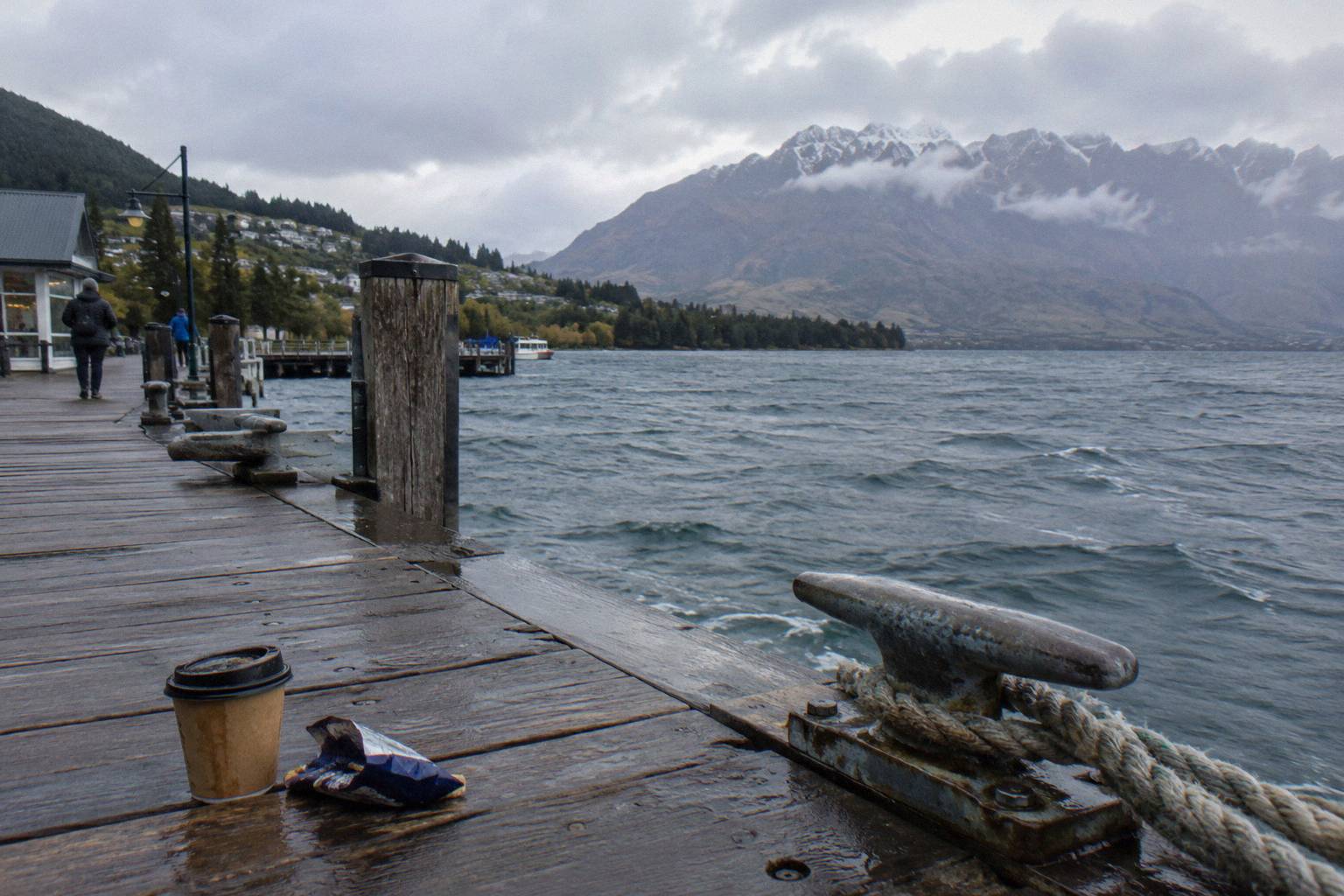
A practical rhythm follows from those two rules together. Watch the forecast, but do not panic-book or panic-cancel at three days out, because mountain weather forecasts in Queenstown are changeable. At the 24-hour mark, decide with the freshest forecast you have: before that line, you can cancel free; after it, you are committed unless KJet itself pulls the pin. Riders who want the decision framework in more detail, including what happens on the day itself, can read the guide to weather cancellations on KJet rides.
It is also worth separating the things that genuinely change a ride from the things that do not. Rain changes how the town looks and how wet your face gets. Cold changes your clothing list. Neither touches the timetable. What can touch it sits in a category the operator keeps to itself, which is unhelpful for planning: a river-mouth bar, a serious storm system or an equipment issue are all "unforeseen circumstances" in the terms, and the same rebook-or-refund rule covers them.
Do The Other Jet Boat Options Also Run In Winter?
Yes, the Queenstown operators that list seasonal hours run all year. KJet departs hourly from 10am to 6pm, 365 days a year, weather permitting, and the regional tourism page says it even runs on Christmas Day from 10am. The same page lists Thunder Jet open 8:30am to 5pm daily all year, closed on Christmas Day.
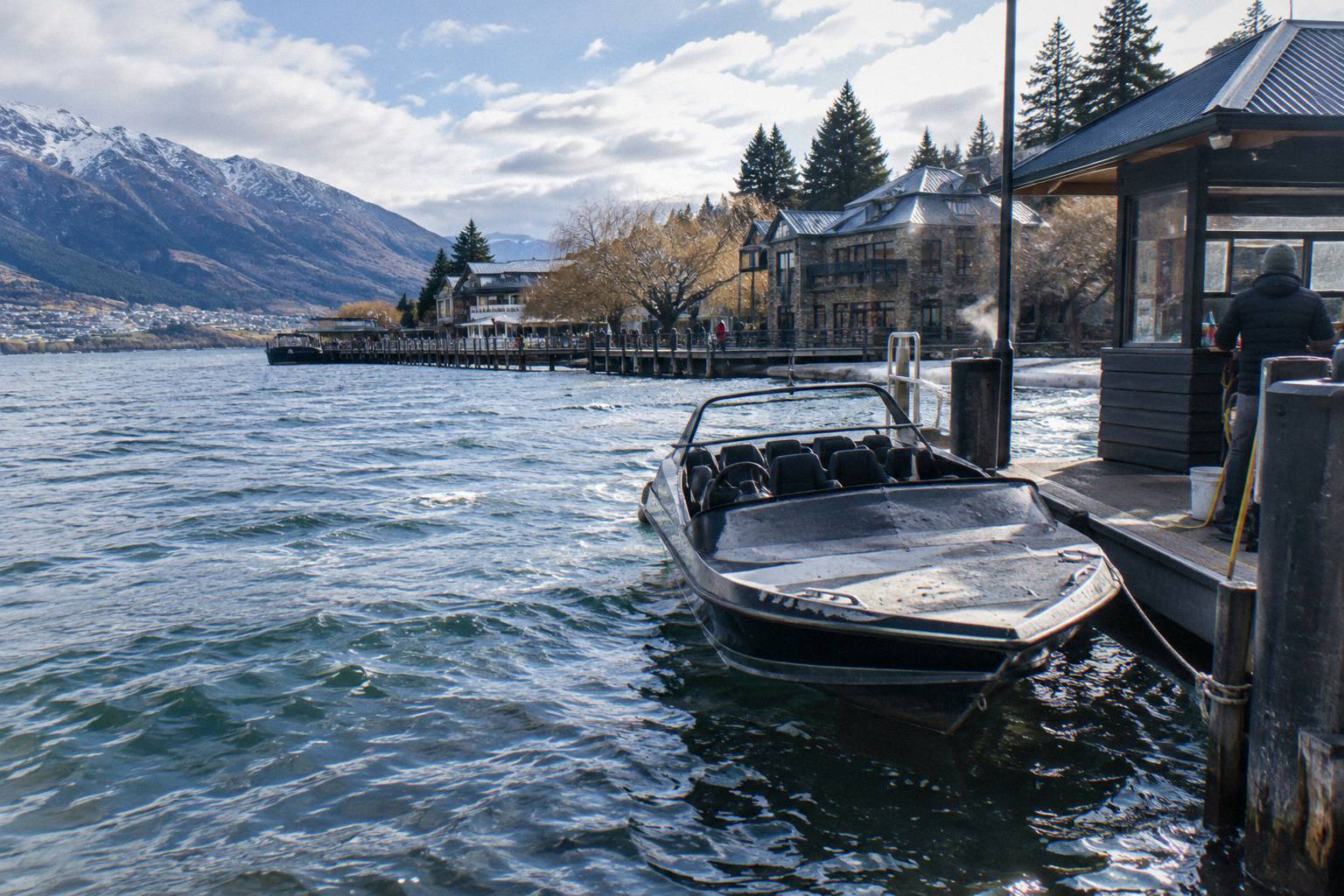
Winter shapes the alternatives differently, and that is worth a sentence each rather than a ranking. Thunder Jet's 30-Minute Jet Boat Ride, from NZ$119 per person and rated 4.7 from 27 reviews, leaves from the Watersport kiosk on Steamer Wharf, 88 Beach Street, and covers Lake Wakatipu and the Kawarau River with full 360 degree spins listed among the inclusions. Half an hour on the water in July is a shorter cold exposure than a full hour, which some families see as the practical winter argument for it, and its regional tourism listing shows the same all-year opening as KJet.
The RealNZ Kawarau Rafting And Jet Boat Trip, from NZ$329 per person and rated 4.9 from 184 reviews, works the other way around: the jet boat leg is the roughly 25-minute transfer to the rafting put-in, then about an hour of rafting on the Kawarau, with wetsuits, rafting clothing and all equipment included. That inclusion list matters in winter, because a wetsuit solves the cold-water problem that a life jacket does not. The trip runs 4 hours 30 minutes in all, meets at the RealNZ Visitor Centre at 88 Beach Street, includes a round-trip transfer, and carries a minimum age of 13 with weight limits of 40 kg to 120 kg.
The one ride that behaves differently is the Shotover Jet Ride, from NZ$199 per person for 25 minutes, which runs on the Shotover River rather than the Kawarau and meets either at the Station Building on Duke Street with return transport or at the river base in Arthurs Point. Its minimum height rule of 1.0 m, rising to a possible 1.2 m in high river conditions, is the clearest published example of conditions changing a rule rather than a timetable. How the two rivers compare as experiences is covered in the KJet versus Shotover Jet comparison.
Is A Winter Ride Actually Worth It?
For many riders, yes, and for reasons the summer crowd misses. Winter brings mean daylight of about 9 hours, snow on the Remarkables, quieter departure slots and the same hourly timetable at the same from-price of NZ$159 per person for the KJet 60-Minute Jet Boat Ride. The trade is simple: colder hands, better odds of a near-empty boat, and a landscape most visitors only see from a ski field. The ride itself does not shrink.
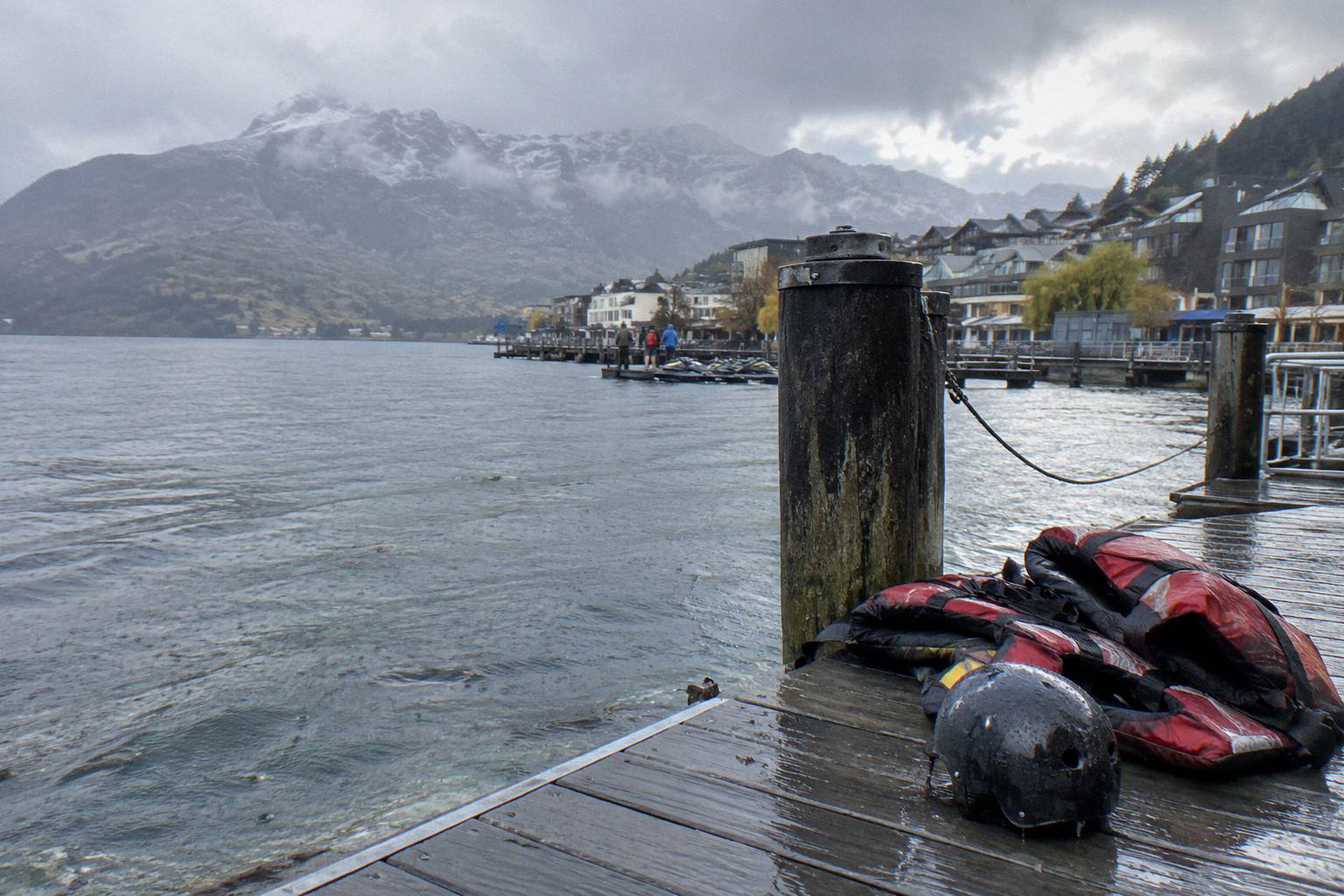
The case against winter is comfort. The mean daily minimum sits below zero in June and July, the boats move fast enough to generate their own wind, and KJet provides no spray jacket. If you run cold, hate layers or are travelling with very small children, the arithmetic changes: the child fare applies from ages 5 to 14, and infants aged 2 to 4 sit on an adult lap, which in deep winter is a long hour for a toddler, even with heated handrails to lean against. The case for winter is everything else. The lake is often mirror-still on cold mornings, the mountains carry snow from roughly June onward, and the 10am and 11am departures land in the brightest, calmest part of the short day.
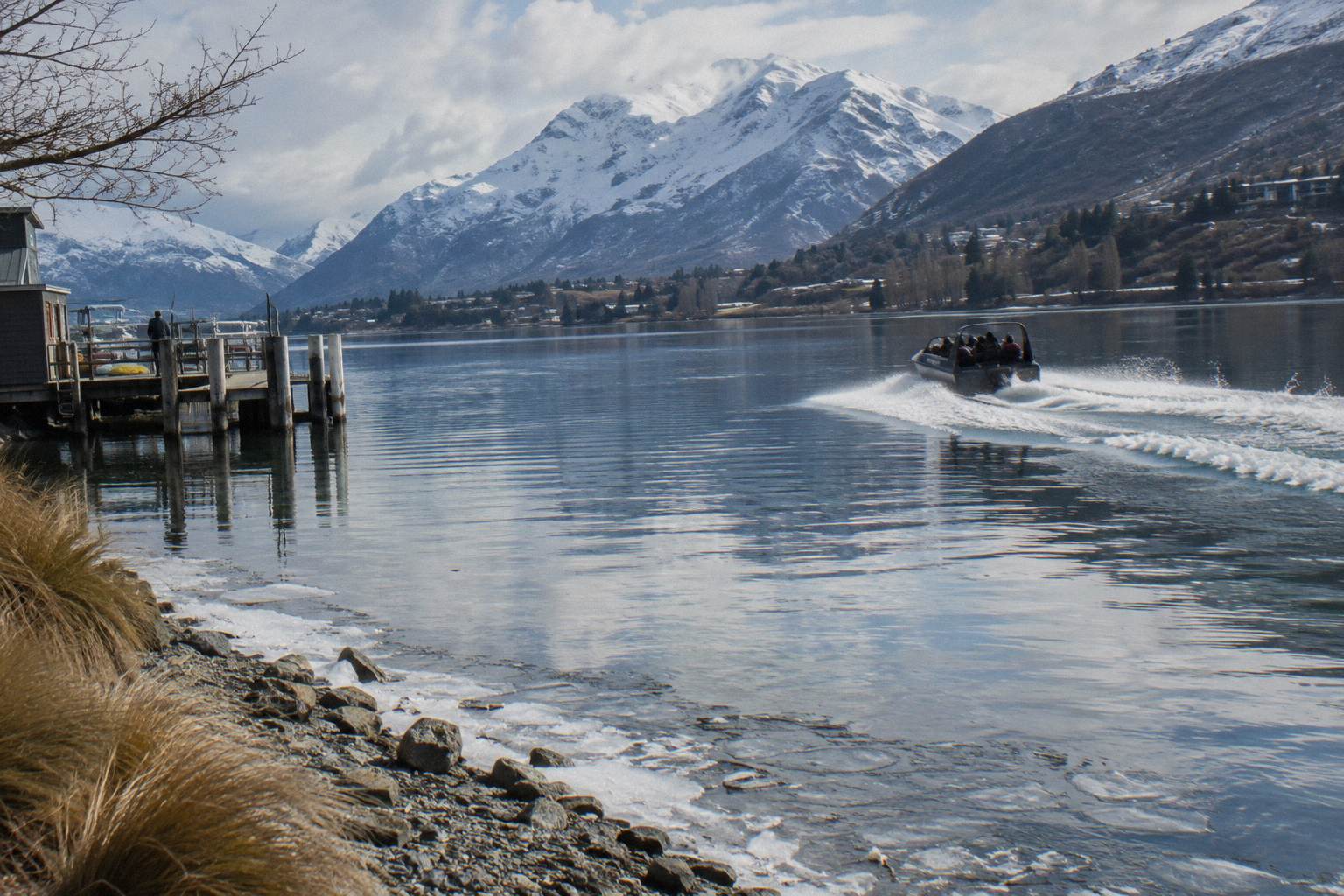
There is also a booking-practicality angle. Summer is Queenstown's crunch season, and hourly departures fill; a wet or grey winter weekday is far more forgiving, which matters if your plans might shift. Every one of the five rides carries free cancellation up to 24 hours on its booking page, so the cost of a speculative winter booking is low, and the 24-hour line is far enough out to react to a forecast. Riders weighing the whole question of value rather than just weather may want the longer treatment in is a KJet ride worth it, which works through price against duration rather than against the thermometer.
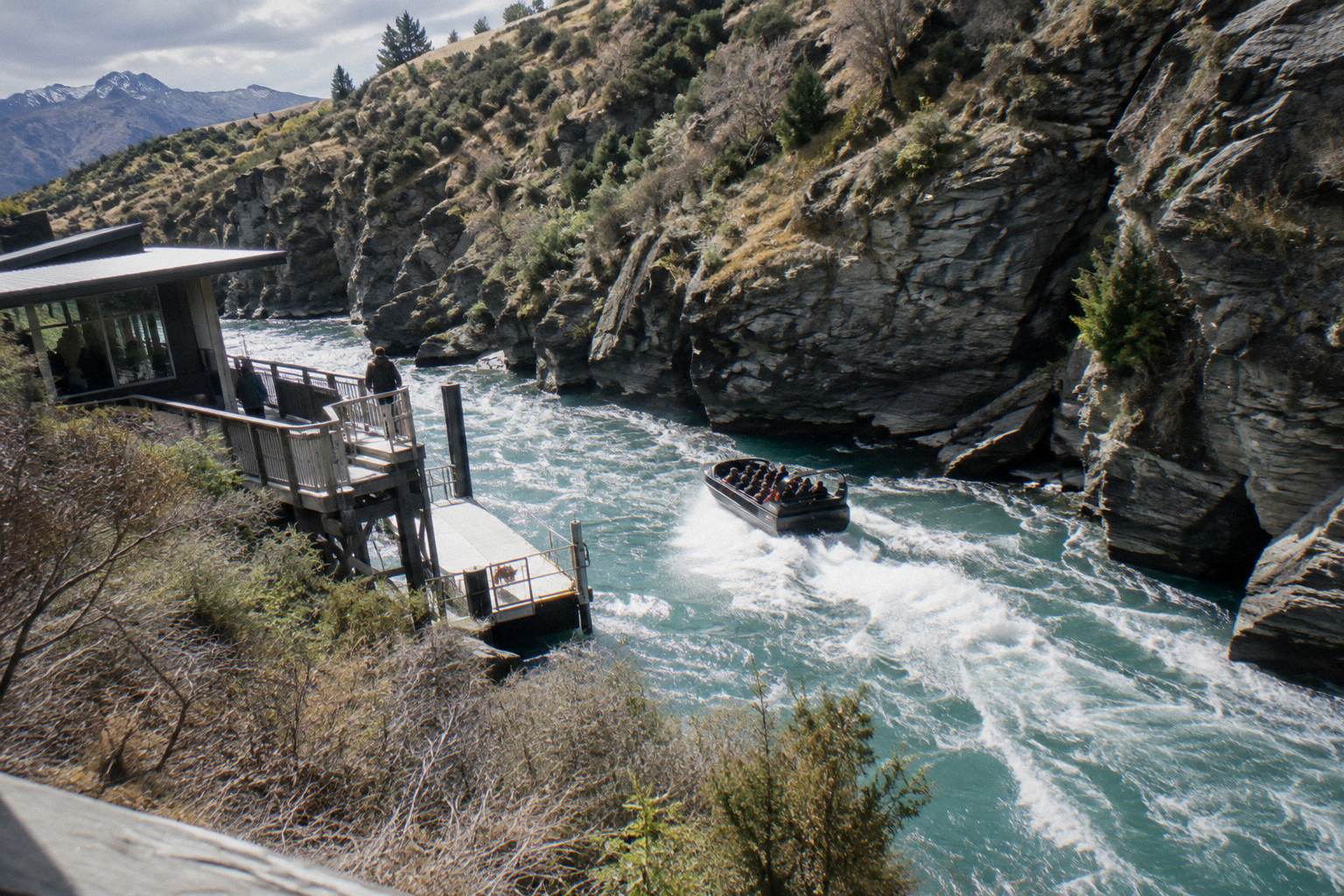
A final reassurance point, because some winter bookers wonder whether they are being reckless. Commercial jet boating on New Zealand rivers is a licensed activity under Maritime Rules Part 82: drivers must hold a New Zealand Commercial Jet Driver (River) Licence, Maritime NZ inspects boats and safety equipment and audits operations, and the operator's certificate must be displayed prominently at the operation. Winter changes the packing list, not the licensing regime. On the water itself, speed rules are handled at council level: the Queenstown Lakes District Council jet boating page records that the 5-knot nearshore limit is uplifted on the Kawarau River from Lake Whakatipu to the Arrow River confluence all year, except a buoyed area near the Zoological Gardens. More on that framework sits in jet boat safety rules and licences in Queenstown.
KJet's own account of its history is a winter-relevant detail too. The operator's site describes the company as the world's first commercial jet boat operator, born in 1958, a claim that comes from KJet itself rather than an independently confirmed fact. Either way, a business running hourly departures through six decades of Otago winters has seen more July mornings than any visitor booking one.
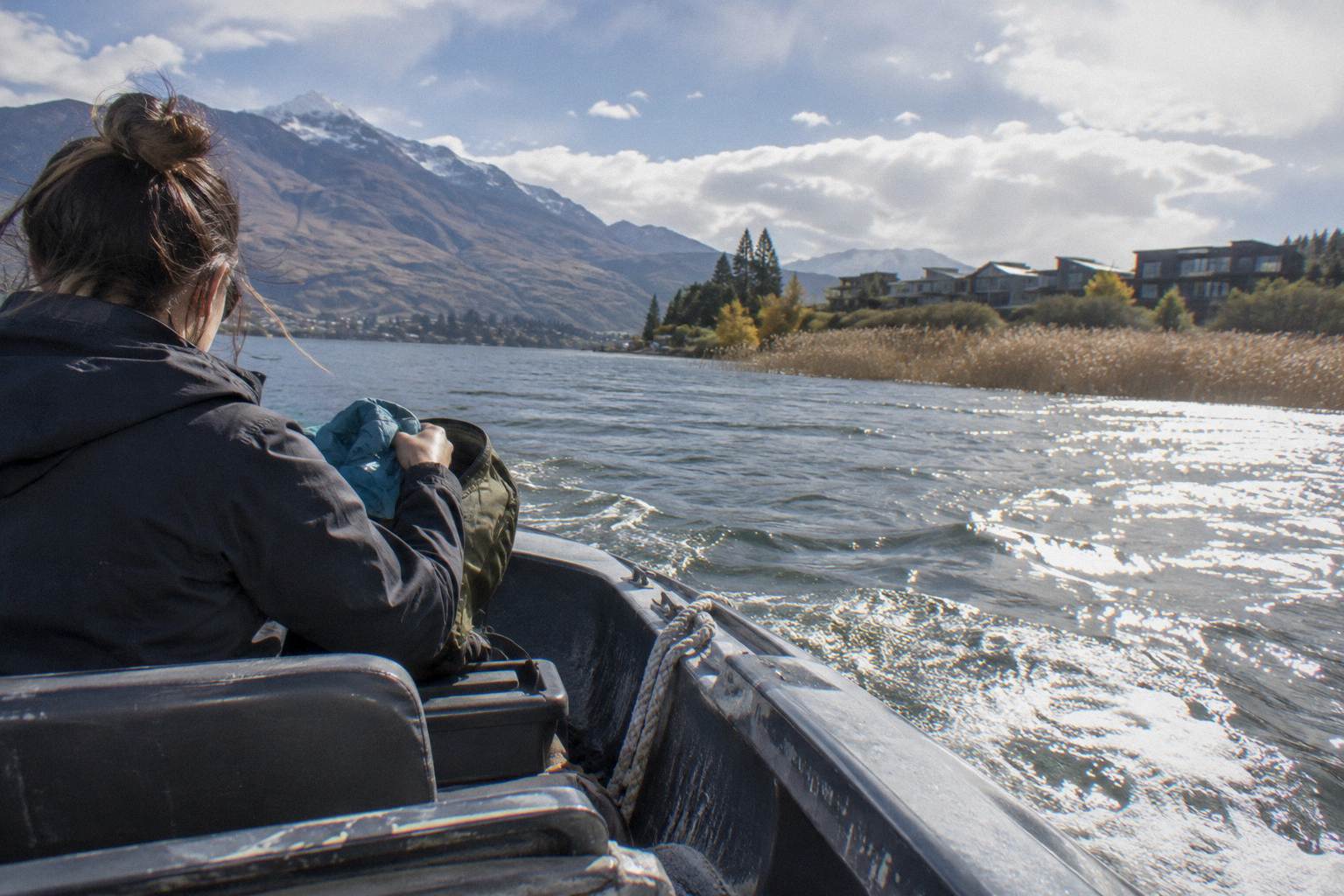
Booking A Wet-Day Or Winter Ride Without Stress
Pick a departure at least a day out, watch the forecast, and let the 24-hour free-cancellation line on the booking page do the work. Book the slot you want while it exists, because hourly departures in peak weeks still fill, and cancel free if the forecast sours before the 24-hour mark.
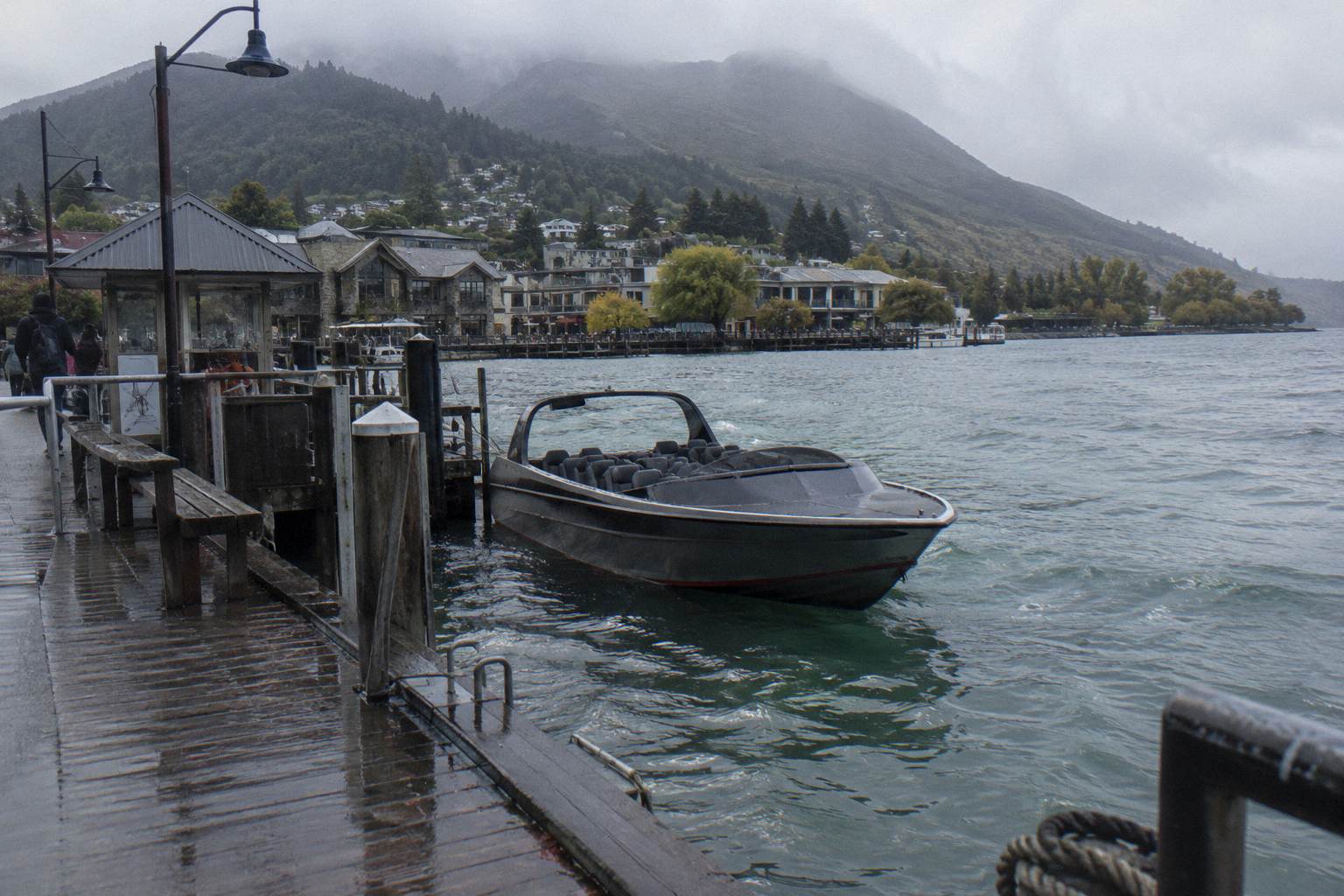
If KJet cancels for weather, you get a rebook or a full refund, so the operator, not the weather, is the party that can strand you, and it has committed not to. The clothing plan is the other half of a stress-free booking. Charge nothing to luck on the day: waterproof jacket or budget for the eco-poncho, hat and gloves from about May through September, sunglasses or goggles against winter glare, sunscreen in every month, closed shoes always, and a plan to keep phones stored while the boat moves. If staying dry matters more than anything else to you, ask about seating at check-in; centre seats are drier, but KJet cannot guarantee a seat.
Families should check the age rules once before booking rather than at the pier. Children 5 to 14 pay the child fare and must ride with an adult, infants aged 2 to 4 sit on a lap free, one adult per infant, and under-2s cannot ride. Pregnant passengers cannot ride either, a rule covered properly in jet boating while pregnant or with health conditions. None of these rules changes with the season, but a cold day makes them worth knowing in advance rather than discovering at the pier. To see which rides operate in wet or cold weather, compare the seasonal details for each option at Kawarau River Jet Boats before you lock in a date.
Common Questions About Rain And Winter KJet Rides
Does A KJet Ride Run In Rain Or Winter?
Yes. The booking page says rides operate rain or shine, and KJet says boats leave every hour on the hour from 10am to 6pm, 365 days a year, weather permitting. Rain and cold do not stop departures; only an operator weather call does, and that comes with a rebook or a full refund.
What Happens If KJet Cancels For Weather?
KJet's terms say it may cancel or amend a trip for weather or unforeseen circumstances, and it then offers rebooking or a full refund. No-shows, and cancellations or amendments inside 24 hours of departure, are non-refundable at management discretion, and amendments need 24 hours' notice.
Do They Give You A Jacket If It Rains?
No. KJet does not provide spray jackets. Bring your own waterproof jacket or buy an eco-poncho at the base. Life jackets are provided, and the winter boats have heated handrails.
How Cold Is Too Cold For The Ride?
There is no published cold cutoff. NIWA records at Queenstown Airport show mean July daytime maximums of 8.2 °C and the ride runs through them every year. With a waterproof jacket, warm layers, a hat and gloves, most riders are comfortable; underdressed riders usually are not.
Does KJet Run On Christmas Day?
The regional tourism page for KJet lists office hours of 9am to 7pm and says the ride runs on Christmas Day from 10am, consistent with the operator's stated 365-days-a-year timetable, weather permitting.
Can I Cancel My Booking If The Forecast Looks Bad?
Yes, up to 24 hours before departure, with free cancellation on the booking page. Inside 24 hours, cancellations are non-refundable at management discretion, so make the call while the forecast is fresh and the free window is still open.