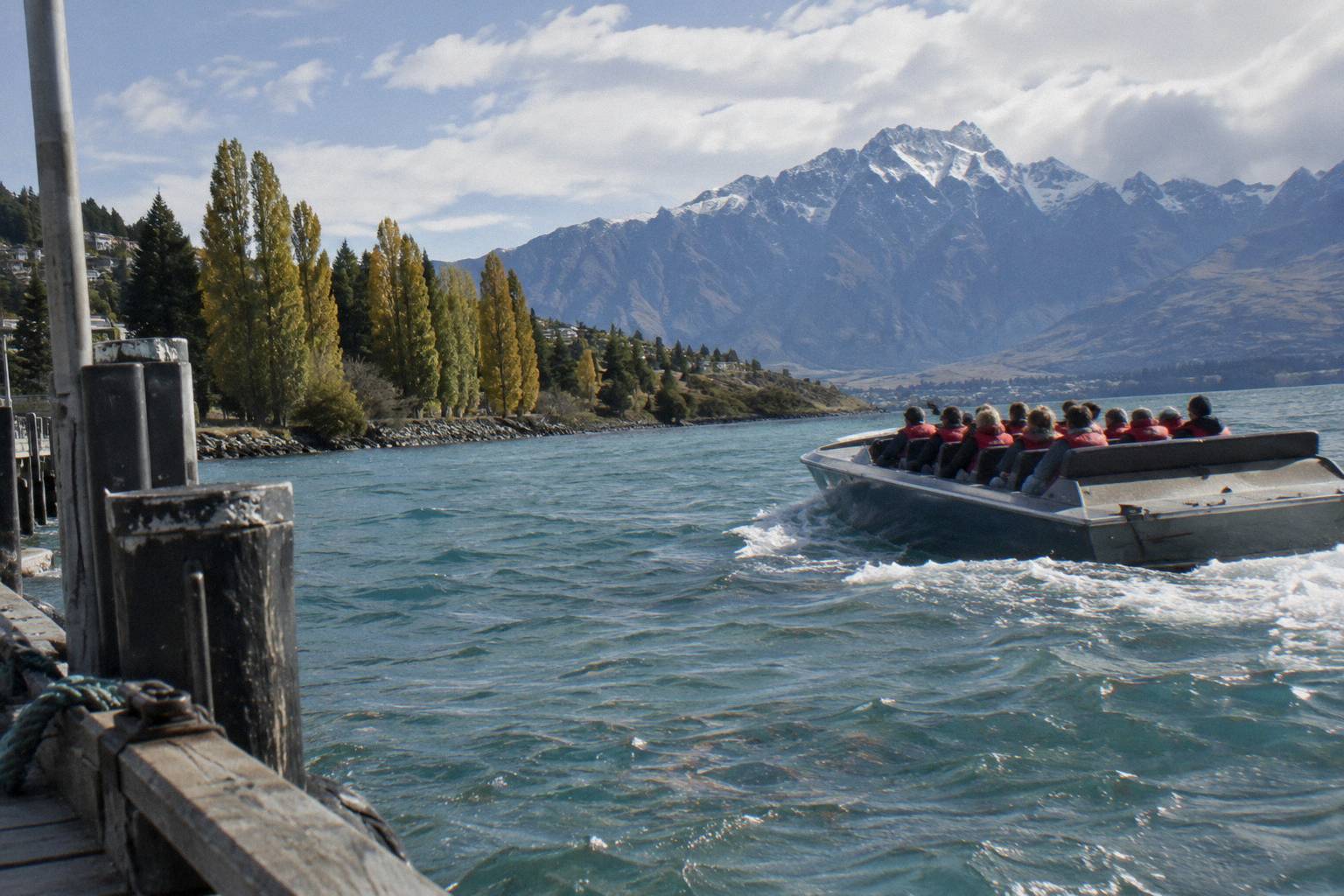
What To Wear On A Jet Boat Ride In Queenstown, Month By Month
What you wear on a Queenstown jet boat ride comes down to a short list the operator itself publishes: a waterproof jacket, closed shoes, sunscreen, and in winter sunglasses, a hat and gloves. Here is that list spread across all twelve months, with the NIWA temperature normals that explain why.
Short answer
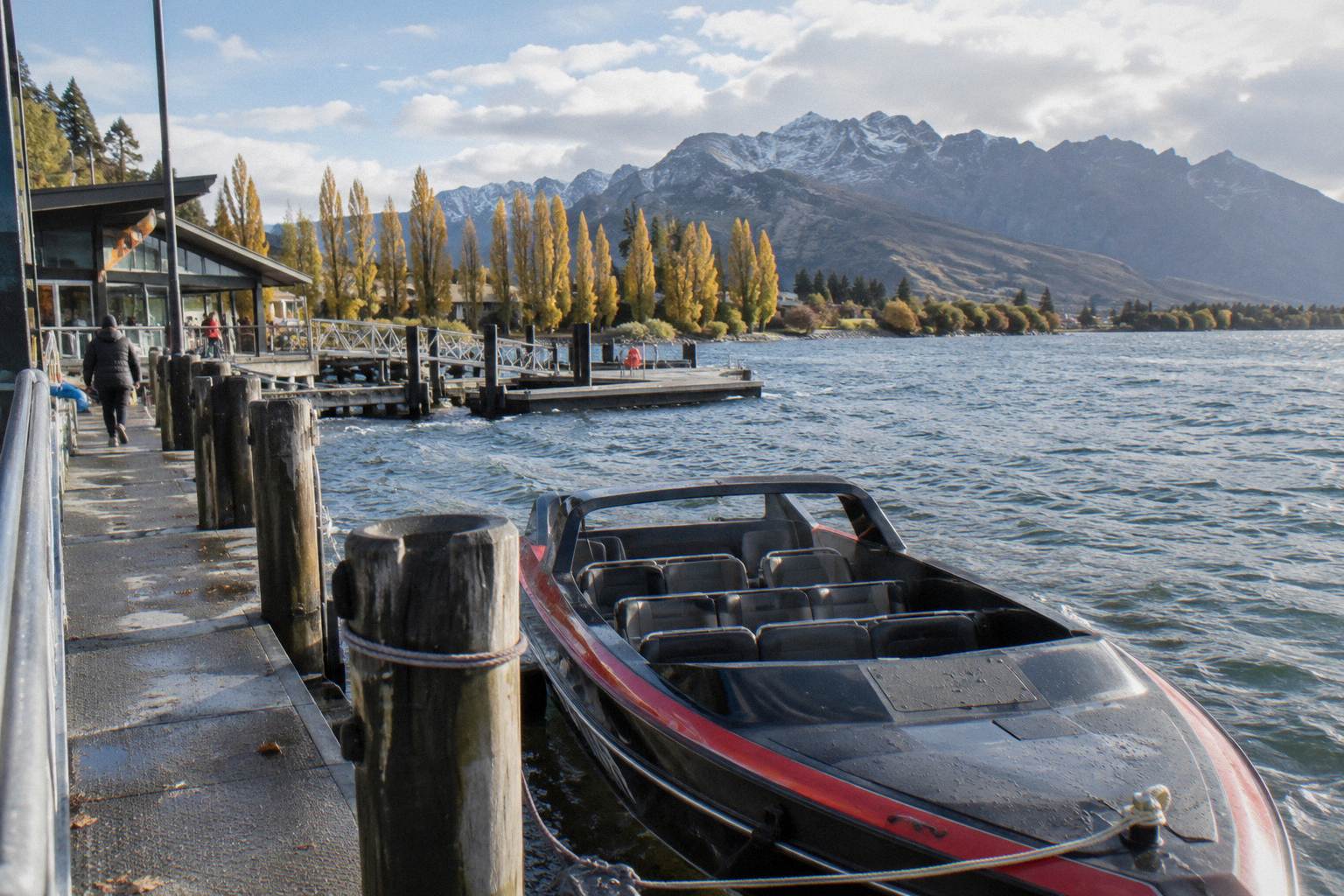
KJet does not provide spray jackets, so bring your own waterproof jacket or buy an eco-poncho at the base. Closed shoes are the footwear rule, sunscreen applies all year, and winter adds sunglasses or goggles, a hat and gloves. July means daily highs of 8.2 °C and lows of -1.4 °C; January means 22.0 °C and 9.9 °C, per NIWA records at Queenstown Airport.
Packing for a jet boat ride in Queenstown is simpler than most travellers expect, because the main operator publishes a short, specific list and the climate data does the rest. KJet states plainly that spray jackets are not provided: you bring a waterproof jacket of your own or buy an eco-poncho at the base, and the rest of the list is closed shoes, sunscreen, and in the colder months sunglasses or goggles, a hat and gloves. Life jackets are supplied on every ride, so that is one item you never need to think about.
What the list does not cover is how those items map onto the actual calendar. Queenstown is not a steady climate. NIWA records at Queenstown Airport show mean daily maximums swinging from 8.2 °C in July to 22.0 °C in January, and mean daily minimums dropping below zero from June through August. A waterproof jacket you would barely notice in February is the single most important thing you own in June. The month-by-month tables below take KJet's stated items and match them to those station normals, so a booked rider can pack directly.
No claim is made here about how wet anyone gets, because no operator publishes a wetness figure, and seating, including the drier centre seats KJet mentions, cannot be guaranteed. For the fuller picture of clothing decisions and ride comfort, Kawarau River Jet Boats collects the planning questions in one place.
What Does The Operator Actually Tell You To Wear?
KJet's stated wear list is short and specific: a waterproof jacket or an eco-poncho bought at the base, closed shoes, sunscreen, and in winter sunglasses or goggles, a hat and gloves. Spray jackets are not provided, life jackets are, and winter handrails are heated. That is the entire published list, and it is the only official basis for packing.
The detail worth pausing on is the spray jacket point. Many travellers assume a commercial jet boat operator hands out spray gear the way a rafting company hands out wetsuits, and for the Kawarau rides that assumption is wrong. KJet's FAQ is explicit: spray jackets are not provided, bring a waterproof jacket or buy an eco-poncho at the base. Shotover Jet's booking facts say the same, no spray jackets. So the jacket question is settled before you leave your accommodation: if you own a waterproof layer, pack it; if you do not, the base sells one.
The rest of the list is straightforward. Closed shoes are the footwear rule; life jackets are provided on every ride, so never bring one. Sunscreen makes the list even in winter, which surprises visitors from the Northern Hemisphere, but Queenstown's UV combined with glare off the water justifies it. The winter additions, sunglasses or goggles, a hat and gloves, exist because of wind chill at speed on an open boat, and KJet's winter answer adds a genuinely useful detail: the handrails are heated in winter. Cold hands holding a warm rail is a different experience from cold hands gripping frozen metal.
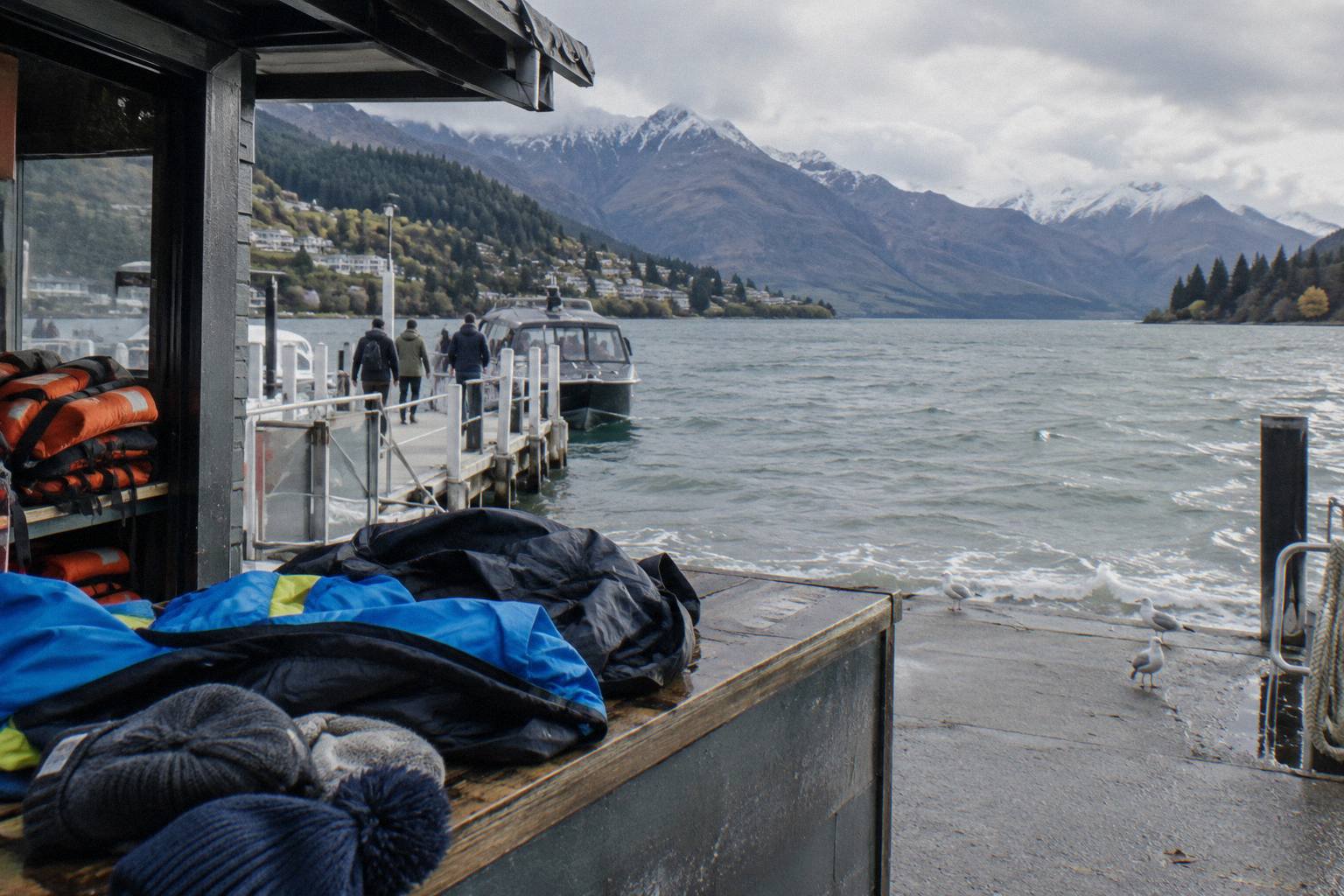
One item the list implies rather than states: a camera or phone must be stored while the boat is moving, with hands-free mounted action cameras the only exception, per KJet's rules, and no selfie sticks. Whatever you wear should therefore include a secure pocket or a small dry bag for the phone you will want at the slower moments. This sits alongside the practical questions in the guide to what to wear and bring for the ride, which covers the same list from the first-time rider's angle.
Length of ride also shapes how much the clothing matters. A 30-minute Thunder Jet ride from Steamer Wharf and a 4 hours 30 minutes RealNZ raft-and-jet trip put you outdoors for very different spans, and the raft trip supplies its own wetsuit and rafting clothing, so your packing for that one reduces to a swimsuit and towel.
How Cold Is Queenstown, Really, Month By Month?
NIWA records at Queenstown Airport, the 1991 to 2020 normals, put mean daily maximums at 22.0 °C in January and 8.2 °C in July, with mean daily minimums of 9.9 °C and -1.4 °C in the same months. June through August all average below zero overnight. Yearly rainfall is 721 mm spread over 96 rainy days.
- Thunder Jet 30-Minute RideNZ$119
- KJet 60-Minute RideNZ$159
- Thunder Jet 1-Hour RideNZ$159
These are station normals, measured at the airport, and they describe the air at the jet boat pier closely enough for packing purposes. They are not river temperatures and not forecasts; no water temperature is published, and no one should read a July maximum of 8.2 °C as a promise about any particular morning. What the numbers do establish is the shape of the year: a real winter, a warm but not scorching summer, and shoulder months that change fast.
The daylight figures matter as much as the temperature for anyone choosing a departure time, since KJet runs departures every hour on the hour from 10am to 6pm, 365 days a year, weather permitting. Mean daily daylight runs 9.2 hours in July against 15.6 hours in December. A 5pm winter departure is a dusk departure; the same slot in December is full afternoon light. The guide to choosing a departure time for a KJet ride works through that choice in detail.
| Month | Mean daily max (C) | Mean daily min (C) | Sunshine hours |
|---|---|---|---|
| January | 22.0 | 9.9 | 236.9 |
| February | 21.8 | 9.5 | 209.3 |
| March | 19.1 | 7.3 | 180.0 |
| April | 15.2 | 4.5 | 136.2 |
| May | 11.9 | 2.3 | 83.8 |
| June | 8.6 | -0.4 | 69.3 |
| July | 8.2 | -1.4 | 85.2 |
| August | 10.2 | 0.2 | 119.5 |
| September | 13.0 | 2.4 | 151.0 |
| October | 15.4 | 4.4 | 197.0 |
| November | 17.5 | 6.2 | 217.9 |
| December | 20.2 | 8.5 | 212.6 |
What To Wear In Summer: December, January, February
Summer packing for the Kawarau is the light version of the list: closed shoes, sunscreen, a waterproof jacket in your bag rather than on your back, and sunglasses. Mean daily maximums run 20.2 °C in December, 22.0 °C in January and 21.8 °C in February, with minimums of 8.5 °C to 9.9 °C, so a morning departure can still feel cool on the water.
Sunscreen is the summer item people underestimate. January averages 236.9 sunshine hours, the brightest month of the year, and glare off Lake Wakatipu and the river doubles the exposure from above and below. KJet lists sunscreen without seasonal qualification: it is on the list in February just as firmly as in July. Sunglasses earn their place in summer too, even though the operator names them specifically as winter gear, because spray and glare do not check the calendar.
The waterproof jacket question in summer is a judgement call the operator leaves to you. With mean daily maximums above 20 °C across all three months, most riders will not wear a jacket for the whole trip, but the item is still the one KJet names first, and a squall can arrive on any of the 96 rainy days the averages contain. The cheap answer is a packable shell that lives in your daypack. The expensive answer is the eco-poncho at the base, which is a purchase rather than a rental and only worth it if you are caught out.
Footwear is where summer visitors most often get it wrong in the other direction: jandals. Closed shoes is the rule, and it applies at 22 °C exactly as it does at 8 °C. Sandals that strap fully and enclose the toe may pass, but the safe reading of "closed shoes" is a pair you could walk a river track in. For the fuller ride-day picture, the guide to winter jet boating on the Kawarau covers the opposite end of the same decisions.
What To Wear In Shoulder Season: March, April, May, September, October, November
Shoulder months need the full layered approach: waterproof jacket worn or carried, closed shoes, sunscreen, and from April onward the winter accessories start earning their place. Maximums slide from 19.1 °C in March to 11.9 °C in May, then climb back from 13.0 °C in September to 17.5 °C in November, with minimums of 2.3 °C to 7.3 °C across the season.
March is functionally still summer: a 19.1 °C mean daily maximum with 180.0 sunshine hours means the summer packing list carries over almost unchanged. By April the overnight minimum sits at 4.5 °C and morning departures feel like a different trip. May, at 11.9 °C maximum and 2.3 °C minimum with only 83.8 sunshine hours, is the month where the winter list quietly becomes mandatory rather than optional, especially for the handrails-and-gloves question.
Spring works in reverse and faster. September's 13.0 °C maximum is a May temperature, but November's 17.5 °C with 217.9 sunshine hours is close to midsummer warmth with midsummer glare. The practical rule across both shoulders: pack for the minimum, not the maximum. A 10am KJet departure in April happens closer to the overnight low than the afternoon high, and the same is true in October, when the maximum reaches a respectable 15.4 °C but the minimum is 4.4 °C.
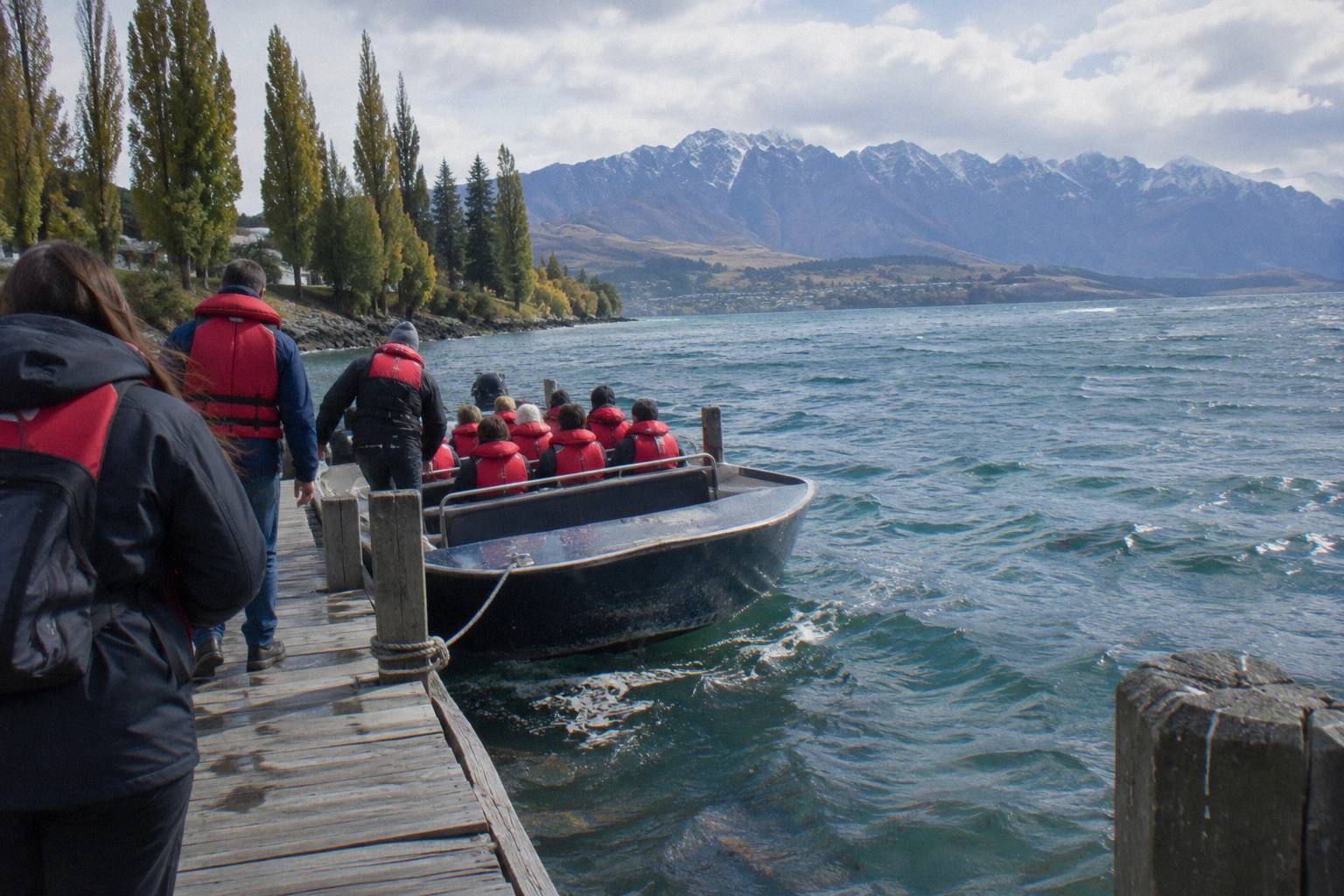
The gloves and hat decision can be made on the day with a simple test: if the morning air hurts your hands at the pier, it will hurt more at speed on the water. Nothing in the operator's list is expensive; all of it is the difference between remembering the river and remembering being cold. Riders weighing the two Thunder Jet ride lengths, which share one base at Steamer Wharf and differ mainly in time on the water, can compare them via the guide to KJet versus Thunder Jet, and the 1-hour Thunder Jet option is below.
What To Wear In Winter: June, July, August
Winter on the Kawarau demands the full list: waterproof jacket, warm layers beneath it, hat, gloves, sunglasses or goggles, closed shoes and sunscreen. Mean daily maximums are 8.6 °C in June, 8.2 °C in July and 10.2 °C in August, with minimums of -0.4 °C, -1.4 °C and 0.2 °C, and daylight averaging just 9.2 hours in July.
The gloves matter most. An open boat at speed in sub-zero morning air strips heat from hands faster than any other part of the body, and KJet's winter answer to the clothing question leads with exactly this: hat and gloves, sunglasses or goggles, and the reassurance that the handrails are heated. Heated rails help between the bursts, but the gloves are still yours to bring. Goggles beat sunglasses in winter because they seal out the wind that ordinary frames let in around the edges.
Layering under the waterproof jacket is the part you control. The operator publishes no dress code beneath the jacket, so the sensible build is the standard Southern Lakes one: a thermal base, a warm mid-layer, and the shell over the top. Jeans are a poor choice; anything that stays warm when damp is a good one. No wetness claim is made here beyond the operator's own jacket advice, and KJet notes that centre seats are drier but that seating cannot be guaranteed, so dress for the worst seat, not the best.
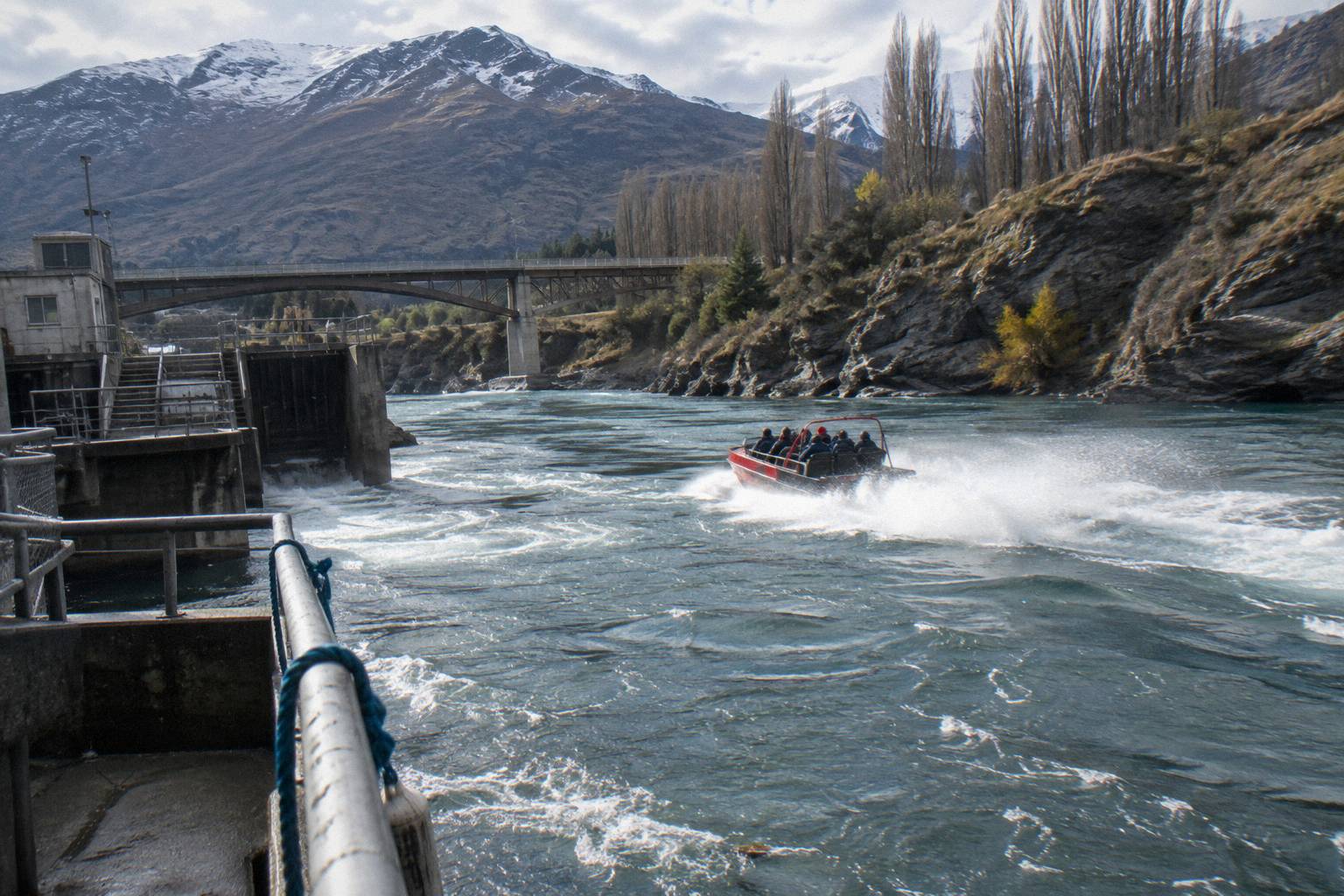
Daylight is the hidden winter constraint. With mean daily daylight of 9.2 hours in July and last departures at 6pm, the winter afternoon schedule compresses toward midday. KJet departs every hour on the hour from 10am to 6pm, 365 days a year, weather permitting, so a midday slot maximises both light and the day's warmest hour. Weather can still cancel a ride, and the guide to when weather cancels a KJet ride explains the rebook-and-refund mechanics, which sit alongside the free cancellation up to 24 hours that every ride carries on its booking page.
Which Items Are Supplied, And Which Are On You?
Life jackets are supplied on every ride, and the RealNZ raft trip goes further, supplying the wetsuit, rafting clothing and all equipment. Everything on KJet's wear list, the waterproof jacket, closed shoes, sunscreen, winter accessories, is on you, and spray jackets are provided by none of the Kawarau operators.
This split, supplied versus bring, is the packing question in its simplest form. The table below sets it out operator by operator, and the one asymmetry is RealNZ: because its Kawarau product is a rafting trip with a jet boat leg of about 25 minutes as the transfer, its inclusion list is a full equipment list, and your own packing shrinks to a swimsuit and towel. Every other ride is a wear-your-own-clothes affair.
| Ride | Supplied | You bring |
|---|---|---|
| KJet 60-Minute Jet Boat Ride | Life vest, driver and guide, safety briefing | Waterproof jacket or poncho, closed shoes, sunscreen, winter hat, gloves, sunglasses or goggles |
| Thunder Jet 30-Minute Ride | Life jacket, commentary, 360 degree spins | Waterproof jacket, closed shoes, sunscreen |
| Thunder Jet 1-Hour Ride | Life jacket, driver and guide, 360 degree spins | Waterproof jacket, closed shoes, sunscreen, winter items in colder months |
| RealNZ Kawarau Rafting And Jet Boat | Wetsuit, rafting clothing, all raft equipment, showers, snacks, transfers | Swimsuit and towel |
| Shotover Jet Ride | Life jacket, driver with commentary, safety briefing | Waterproof jacket, closed shoes (no spray jackets supplied) |
Price is not a clothing question, but the formats are worth naming once so the table has context. The RealNZ trip is from NZ$329 per person for 4 hours 30 minutes; the Thunder Jet 30-minute ride is from NZ$119 per person; the KJet 60-Minute Jet Boat Ride is from NZ$159 per person, 4.7 from 628 reviews. The raft trip below shows the equipment-included format.
What About Cameras, Phones And Glasses?
KJet's rule is that cameras and phones must be stored while the boat is moving, with hands-free mounted action cameras the only exception and selfie sticks banned. Glasses and sunglasses are fine and actively advised in winter, but a strap is cheap insurance. Photographic products exist at some bases, but no photo promise or price is published, so plan to shoot before and after, not during.
The storage rule changes what you wear in one small way: a zipped pocket or a small dry bag on your person beats a phone in an open jacket pocket, because "stored" means stored, and the crew enforce it. Riders who want on-water footage need a mounted action camera, hands-free, which is the one form factor the operator names as acceptable. The longer treatment of KJet photos and video works through the options without promising anything the operators do not.
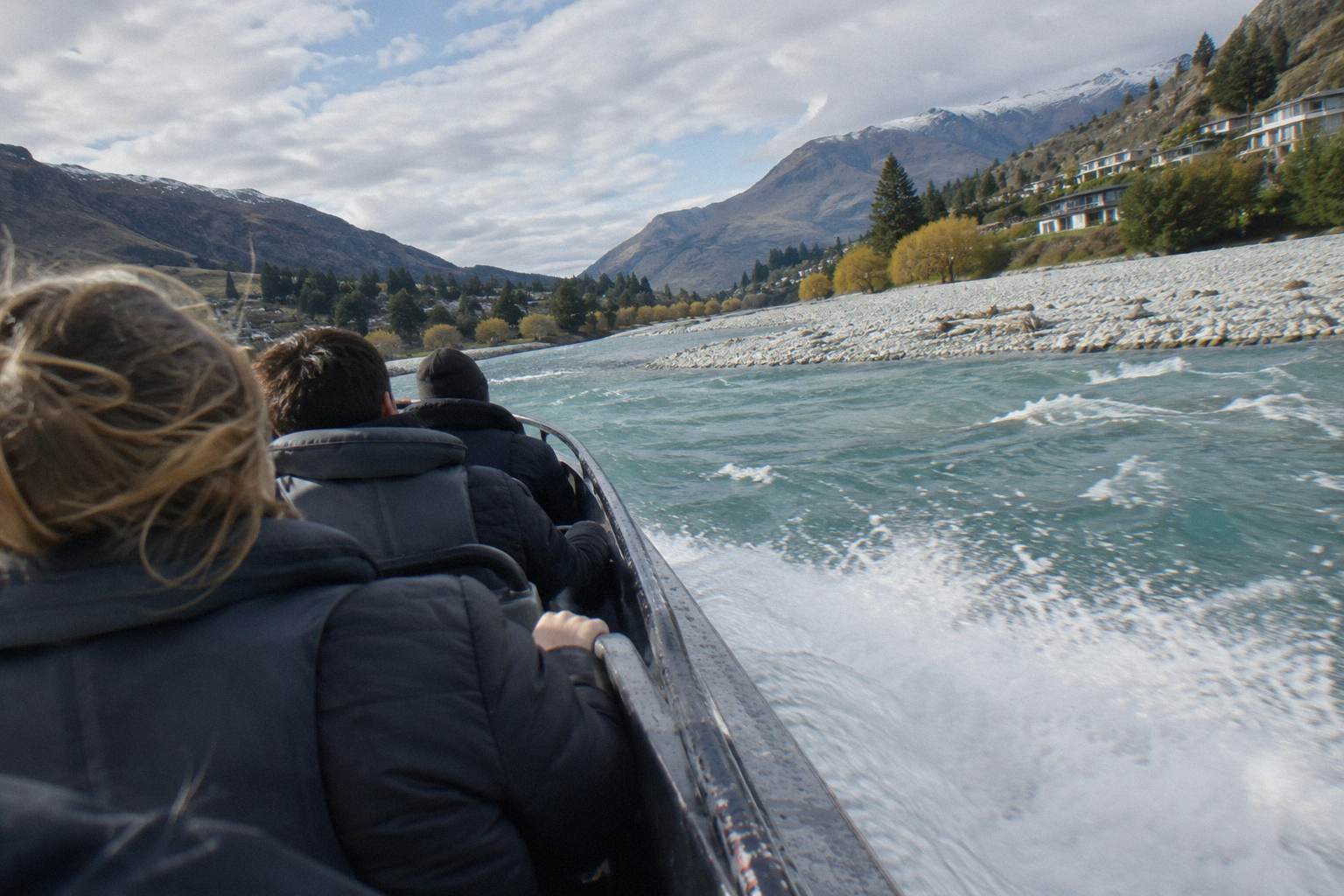
Prescription glasses and sunglasses deserve a strap rather than a pocket. Nothing in any operator's published rules bans eyewear, and KJet's winter advice actively recommends sunglasses or goggles, so the only failure mode is losing them mid-spin. A floating retainer costs a few dollars and removes the risk entirely. This is also where the realism about seating belongs, once, in one place: KJet says centre seats are drier but that seating cannot be guaranteed, so the rider who dresses and secures belongings for any seat has no decisions left to make at the pier.
Does The Same Wear List Apply To Kids?
Yes, with one addition and one age-based note: the list is identical for children, and infants aged 2 to 4 ride on an adult lap, so the adult's clothing becomes the infant's shelter. A child's waterproof jacket, hat and gloves in winter are the same items in smaller sizes, and under-2s cannot ride at all.
KJet's age rules run this way: under 2 cannot ride, infants 2 to 4 sit on an adult lap with one adult per infant, and the child fare covers ages 5 to 14, who must ride with an adult. Thunder Jet's rules are similar, with infants on laps. For clothing purposes a lap-sitting toddler is inside the adult's shell jacket for most of the trip, so the adult should size the waterproof layer with that in mind, and the child still needs the hat and gloves.
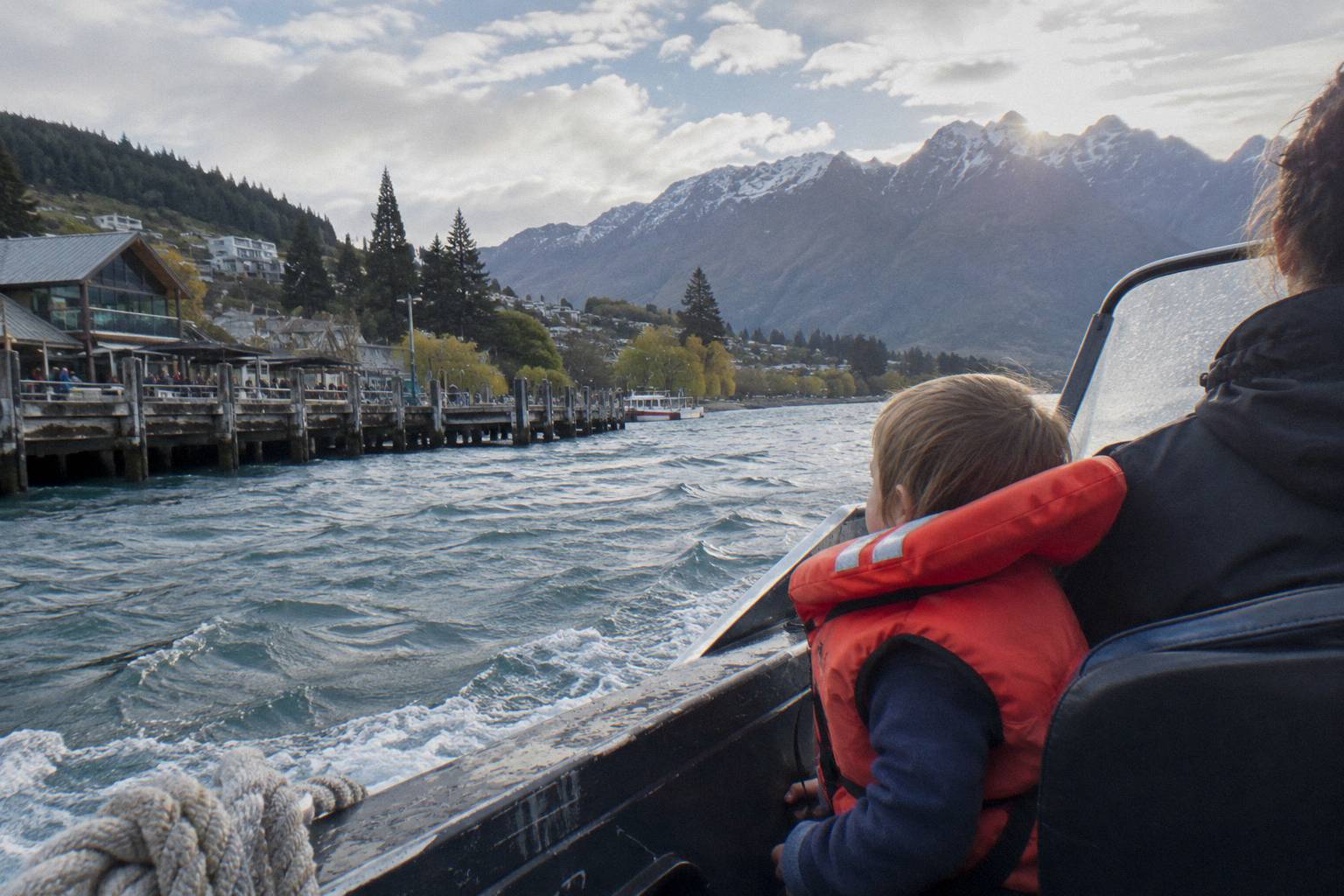
The full age landscape, including the RealNZ minimum of 13 with a guardian and its weight band of 40 kg to 120 kg, is laid out in the guide to jet boat rides with kids and the age rules. The clothing takeaway for families is simply that children feel cold faster, so the winter list applies to them more strictly, not less. Sunscreen is likewise non-negotiable for children in every month; the UV here does not soften for small faces.
One Final Packing Table, All Twelve Months
Each month below pairs the NIWA mean daily maximum and minimum at Queenstown Airport with the items from KJet's stated list that earn their place that month. The list never shrinks below closed shoes, sunscreen and a jacket in the bag; it grows in April and shrinks again in October.
This is the whole article in one table, and it is deliberately conservative: where a month is borderline, the item is included. The waterproof jacket appears in all twelve rows because KJet names it first and rain falls somewhere in the district on roughly 96 days a year. May through September carry the full winter set; March, April and October are judgement months where the morning minimum should decide.
| Month | Max / Min (C) | Wear from the operator's list |
|---|---|---|
| January | 22.0 / 9.9 | Waterproof jacket carried, closed shoes, sunscreen, sunglasses |
| February | 21.8 / 9.5 | Waterproof jacket carried, closed shoes, sunscreen, sunglasses |
| March | 19.1 / 7.3 | Waterproof jacket carried, closed shoes, sunscreen, sunglasses |
| April | 15.2 / 4.5 | Waterproof jacket worn, closed shoes, sunscreen, sunglasses, light gloves for morning rides |
| May | 11.9 / 2.3 | Waterproof jacket, warm layers, hat, gloves, sunglasses, closed shoes, sunscreen |
| June | 8.6 / -0.4 | Full winter list: jacket, layers, hat, gloves, goggles or sunglasses, sunscreen |
| July | 8.2 / -1.4 | Full winter list: jacket, layers, hat, gloves, goggles or sunglasses, sunscreen |
| August | 10.2 / 0.2 | Full winter list: jacket, layers, hat, gloves, goggles or sunglasses, sunscreen |
| September | 13.0 / 2.4 | Waterproof jacket, warm layers, hat, gloves, sunglasses, sunscreen |
| October | 15.4 / 4.4 | Waterproof jacket worn, closed shoes, sunscreen, sunglasses, gloves for morning rides |
| November | 17.5 / 6.2 | Waterproof jacket carried, closed shoes, sunscreen, sunglasses |
| December | 20.2 / 8.5 | Waterproof jacket carried, closed shoes, sunscreen, sunglasses |
A Quick Word On Rules, Not Fashion
Every commercial jet boat driver on a New Zealand river must hold a Commercial Jet Driver (River) Licence under Maritime Rules Part 82, Maritime NZ inspects boats and audits operations, and the operator certificate must be displayed prominently at the operation. None of this changes your packing, but it is the reason the safety briefing at the pier is worth hearing out.
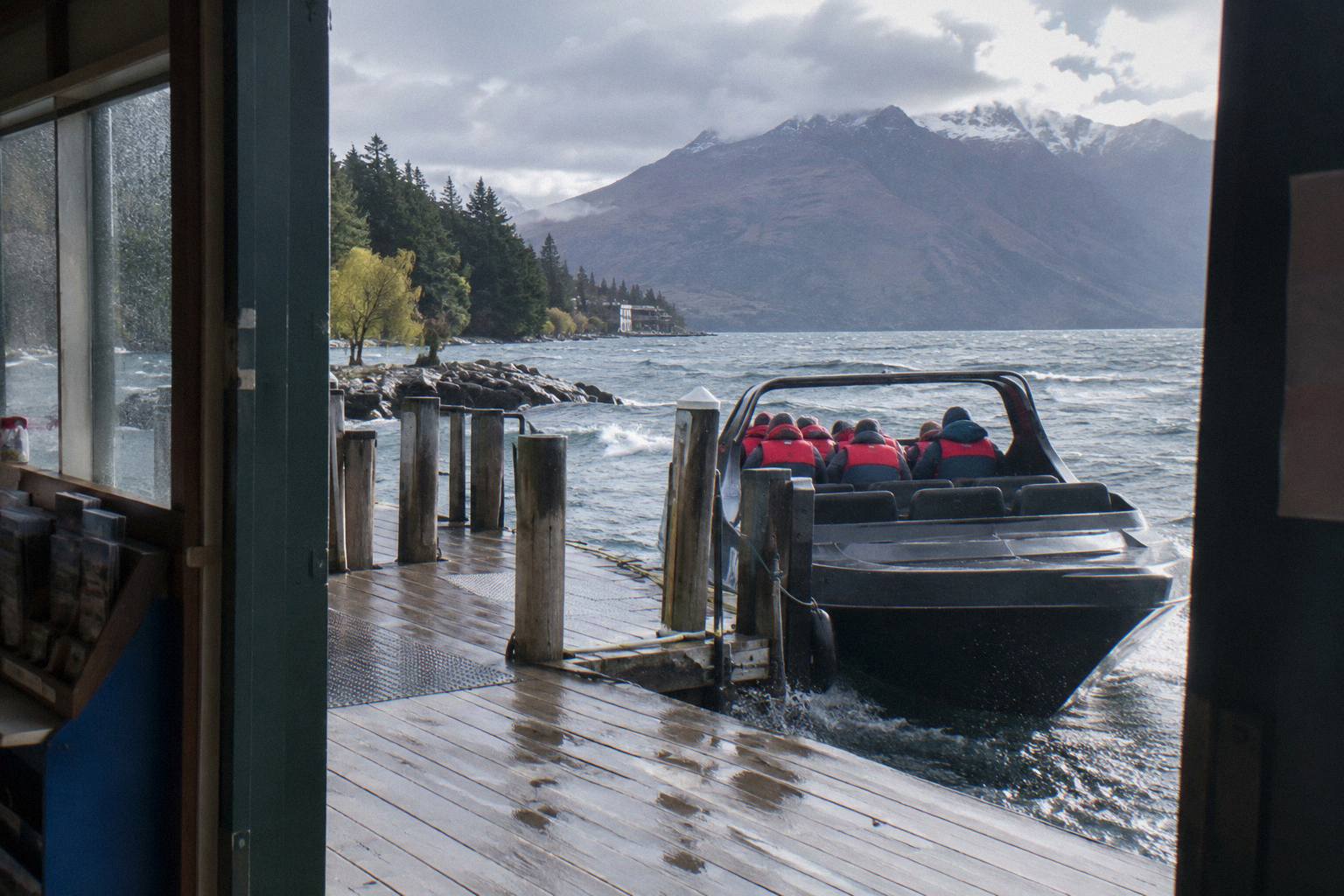
The life jacket you are handed, the briefing you sit through and the crew's instructions are all part of a licensed, inspected operation, and the clothing list exists to work alongside that system rather than replace it. The guide to jet boat safety rules and licences in Queenstown unpacks Part 82 and the local navigation bylaws, including the year-round speed uplift on the Kawarau from Lake Whakatipu to the Arrow River confluence, which is the legal reason these rides can run at commercial speed close to town.
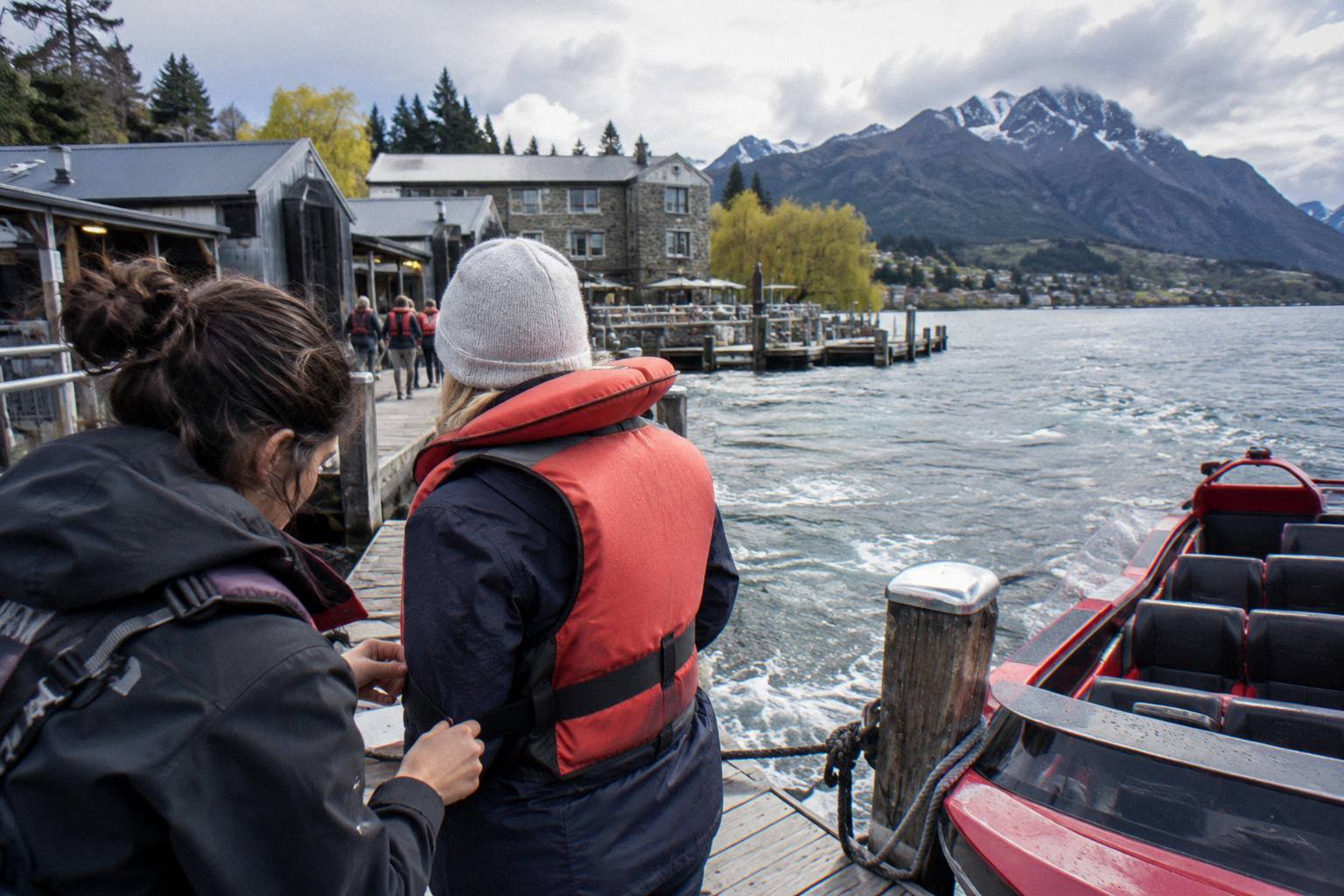
Dressed from the table above, with the jacket decision made and the phone secured, the briefing is the last step between the pier and the water. The short Thunder Jet ride below is the smallest commitment of the set if you want to test the whole packing list before committing to a longer trip.
However you dress, the choice among rides comes down to length and format rather than clothing: every ride supplies the life jacket, every booking page carries free cancellation up to 24 hours, and the wear list above applies unchanged from the Main Town Pier to Steamer Wharf.
Common Questions About What To Wear On A Jet Boat Ride In Queenstown
Do I Need A Waterproof Jacket If It Is Not Raining?
KJet names the waterproof jacket first on its wear list and does not condition it on rain, so yes, carry one in every month. Spray jackets are not provided, and an eco-poncho can be bought at the base if you arrive without one.
Can I Wear Jandals Or Sandals On A Jet Boat?
No. The operator's footwear rule is closed shoes, and it applies in January the same as in July. Wear something you could comfortably walk a river track in.
Do I Need To Bring A Life Jacket?
No. Life jackets are provided on every ride, and the RealNZ raft trip supplies the wetsuit and all rafting equipment as well; for that one you bring a swimsuit and towel.
What Should I Wear In Winter?
The full list: waterproof jacket over warm layers, a hat, gloves, sunglasses or goggles, closed shoes and sunscreen. KJet's winter advice adds that the handrails are heated, but the gloves are still yours to bring. July averages a mean daily maximum of 8.2 °C and a minimum of -1.4 °C.
Can I Take My Phone Or Camera On The Boat?
Yes, but KJet requires cameras and phones to be stored while the boat is moving; hands-free mounted action cameras are the only exception, and selfie sticks are banned. A zipped pocket or small dry bag is the practical answer.
Will I Get Wet?
No wetness figure is published by any operator, so no claim is made. KJet notes that centre seats are drier but that seating cannot be guaranteed, which is exactly why the jacket advice exists in every month.