How Fast Does A KJet Boat Go?
KJet states its Queenstown jet boats travel at up to 95 km/h. Here is what that figure means, why speed changes along the Kawarau, and how the rides compare.
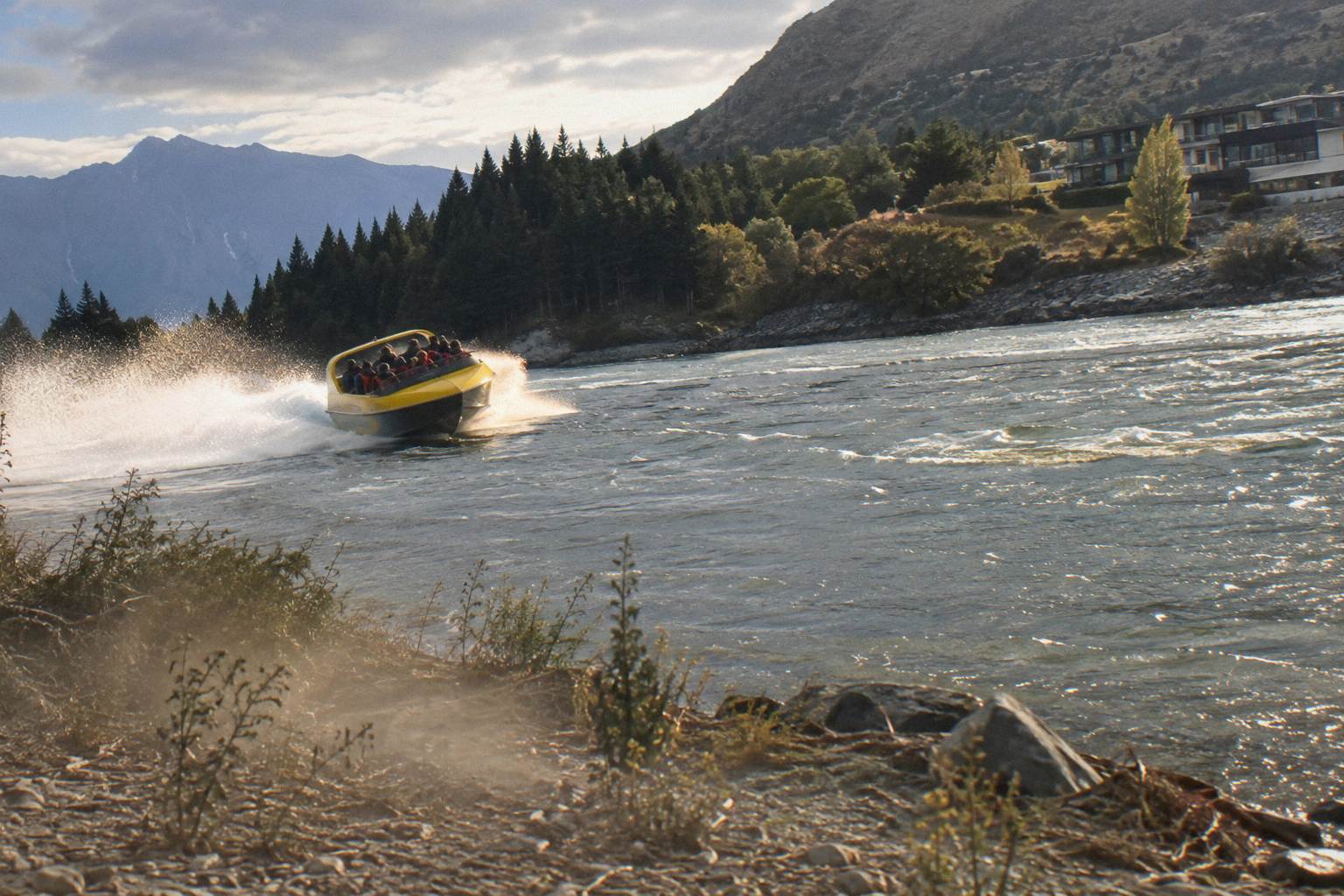
KJet states that its boats travel at up to 95 km/h, and that operator figure is the only speed number the company publishes for its Queenstown rides. It is a top speed, not a constant: the pace drops near the shore, rises in the open uplifted stretches of the Kawarau, and varies with the driver, the load and the weather on the day. No other operator's speed figure belongs in the same sentence.
That single figure does a lot of work in KJet's own marketing, and it deserves unpacking. The claim appears on the operator's home page and in its FAQ, always in the form "up to 95 kph". Two words matter in that sentence. "Up to" means a ceiling, the fastest the boat is rated to travel when conditions allow it, not the speed you will sit at for the full hour. And "kph" is the operator's own wording, so treat it as the operator's claim rather than an independently measured figure.
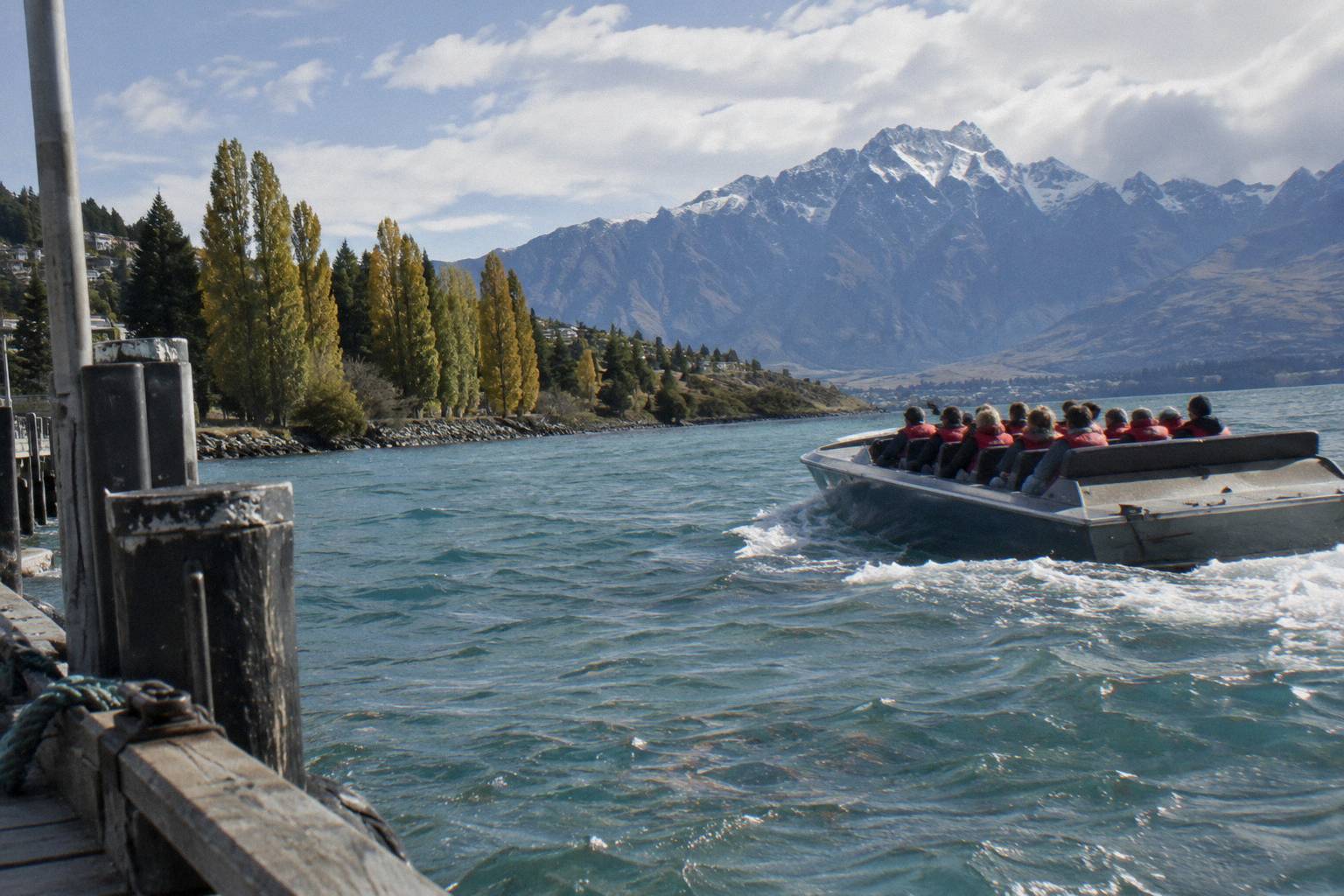
What KJet does publish in detail is the shape of the trip rather than its pace. The 60-minute ride leaves from the Main Town Pier on Marine Parade in Queenstown Bay, and the operator names three waterways: Lake Wakatipu, the Kawarau River and the Shotover River. A shorter version of about 40 minutes leaves from the Queenstown Marina in Frankton. KJet says boats leave every hour, on the hour from 10am to 6pm, 365 days a year, weather permitting, and the regional tourism body describes stepping onto a big yellow KJet every hour. What the route is between those waterways, how long each stretch is, and how deep the water runs are all details KJet has never put a figure to, so any specific claim you read elsewhere is a guess dressed as a fact.
The booking-page figures are firmer ground. The KJet 60-Minute Jet Boat Ride is from NZ$159 per person, rated 4.7 from 628 reviews. Free cancellation applies up to 24 hours before departure. If the speed number is the hook that got you interested, remember that the pace is one ingredient of the ride: what follows covers what the figure actually means, where it comes from, and how the river's own rules shape what any boat can legally do on each stretch.
What Does 95 Km/H Feel Like On The Water?
On flat water, 95 km/h feels like a fast motorway speed with no body around you, and the sensation is more about the turns than the straight-line pace. Jet boats have no propeller dragging below the hull, so they stop, start and change direction in ways a conventional boat cannot, which is why the figure matters less than how the driver uses it. Feeling the number is not the same as watching a speedometer.
- Thunder Jet 30-Minute RideNZ$119
- KJet 60-Minute RideNZ$159
- Thunder Jet 1-Hour RideNZ$159
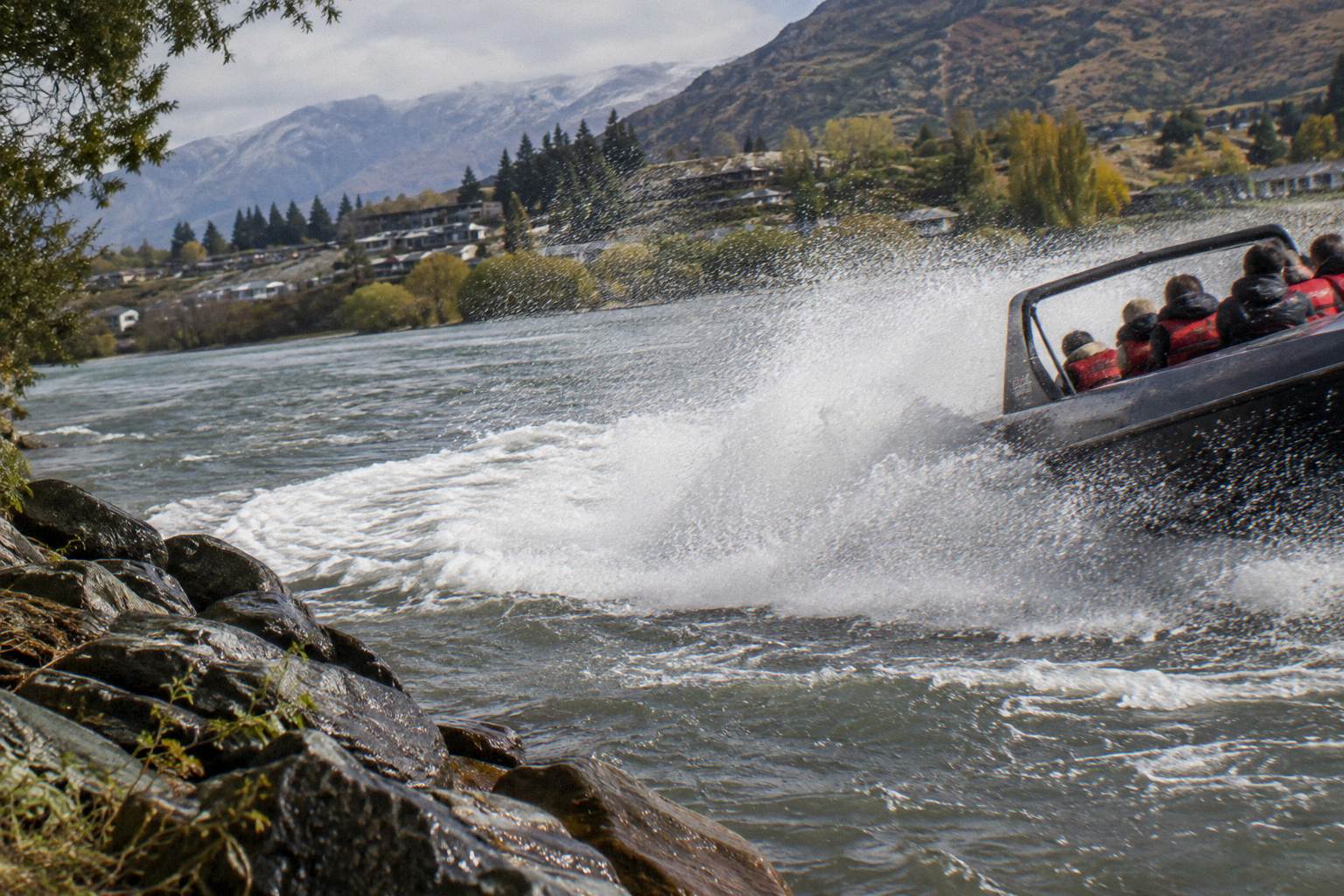
A useful comparison is the one you already know from a car. Ninety-five kilometres per hour on a highway feels routine because the car absorbs the road and you have a windscreen. The same speed on an open boat, low over the water, with the river spray moving past at eye level, registers very differently in the body. Riders who write about the trip afterwards tend to mention the acceleration out of the turns and the sudden stops more than the cruising speed, and the booking pages for these rides describe full 360 degree spins on the Thunder Jet products, which is where most of the sensation lives.
It also matters that the number belongs to KJet alone. Thunder Jet's booking pages list a 30-minute ride and a 1-hour ride, both covering Lake Wakatipu and the Kawarau River, but publish no top speed, so check with the operator on the booking page before you go if speed matters to you. The RealNZ trip publishes no jet boat speed either: its jet leg of about 25 minutes exists to move you to a rafting put-in on the Kawarau. Anyone who tells you all Queenstown jet boats travel at the same speed is making it up, because only one operator publishes a figure at all.
That is not a reason to be anxious. If the speed question is really a nervousness question, the practical reading is this: the top figure applies in short bursts on open water, every ride starts with a safety briefing and a life jacket, and the driver holds a commercial licence we will come to shortly. If your worry is about a specific health condition, the booking pages are explicit: the KJet ride is listed as not suitable for travellers with back problems or serious medical conditions, and pregnant passengers cannot ride under KJet's own terms. Those rules are firmer than any speed number.
Why The Speed Changes From One Stretch To The Next
The real answer to "how fast" is a legal one, and it comes from the Queenstown Lakes District Council, not from any operator: national rules cap boats at 5 knots or below within 200 metres of shore on district rivers, except where the council's Navigation Safety Bylaw lifts the limit. On the Kawarau, that uplift runs from Lake Whakatipu to the Arrow River confluence all year, with one buoyed exception near the Zoological Gardens.
That single piece of bylaw explains why a jet boat ride feels like three different trips. Near the shoreline, in the areas the uplift does not cover, the boat is constrained. In the uplifted middle of the river, the driver has room to use the boat's full capability, and that is where a figure like KJet's stated 95 km/h becomes relevant. The council's own page spells out the exception in plain terms: the uplift covers the "Kawarau River from Lake Whakatipu to the Arrow River confluence, excluding an area marked by yellow buoys adjacent Zoological Gardens in which the 5 knot limit remains in place". Yellow buoys are a visible instruction to slow down, and the drivers pass them every hour.
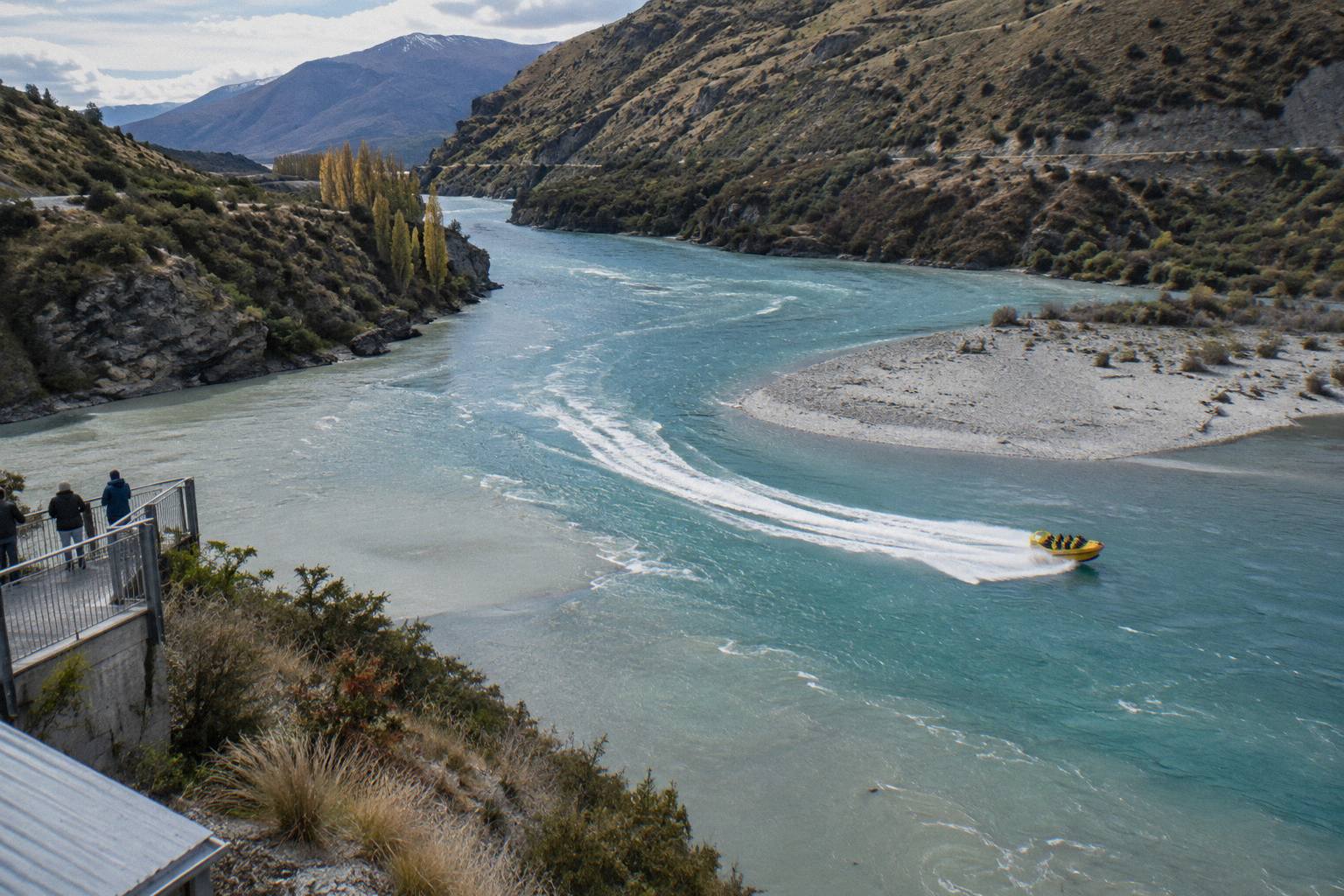
The Lower Shotover has its own entry in the same bylaw. From the Kawarau confluence upstream to the Oxenbridge Tunnel, the speed uplift applies all year, with a permit required for the Shotover River Concession Area. This matters for the KJet ride because the operator names the Shotover River as one of its three waterways, alongside Lake Wakatipu and the Kawarau. The lake itself behaves differently again: open water means the nearshore rule applies around its edges, so even the first minutes of the trip are a study in legal geography as much as speed.
What the bylaw does not tell you is where, on any given day, a driver chooses to open the boat up. That is a judgement call made by a licensed professional reading the water, the traffic and the passengers, which is why two rides on the same day can feel different in pace. The rules set the ceiling and the floor. The driver decides everything between them, and the 24 hour free-cancellation window on the booking page is generous enough that a nervous rider can change their mind without penalty. The full detail sits on the council's jet boating rules page, which is worth a read if you like knowing why the boat slows when it does.
| Stretch of water | Speed rule | Who it comes from |
|---|---|---|
| District rivers, within 200 m of shore | 5 knots or below unless uplifted | National rule, applied by QLDC |
| Kawarau River, lake to Arrow confluence | Speed uplift, all year | QLDC Navigation Safety Bylaw |
| Buoyed area near Zoological Gardens | 5 knot limit remains | QLDC Navigation Safety Bylaw |
| Lower Shotover to Oxenbridge Tunnel | Speed uplift all year, permit for concession area | QLDC Navigation Safety Bylaw |
How Does The Speed Compare Across The Queenstown Rides?
It cannot be compared, because KJet is the only operator that publishes a top speed, and its "up to 95 km/h" figure applies to no boat but its own. What can be compared are the published durations, from-prices and review pools: a 30-minute Thunder Jet ride from NZ$119, a 1-hour KJet or Thunder Jet ride from NZ$159 each, and a 25-minute Shotover Jet ride from NZ$199 on a different river entirely.
The temptation on any comparison is to line up speed claims, and that is a comparison best refused. Thunder Jet, RealNZ and Shotover Jet do not give top speed figures, so if speed matters to you, ask the operator on the booking page before you go. The comparison that actually helps a buyer is about time on the water, price and format, and those figures are published.
| Ride | Duration | From-price | Published rating |
|---|---|---|---|
| KJet 60-Minute Jet Boat Ride | 1 hour | from NZ$159 per person | 4.7 from 628 reviews |
| Thunder Jet 30-Minute Ride | 30 minutes | from NZ$119 per person | 4.7 from 27 reviews |
| Thunder Jet 1-Hour Ride | 1 hour | from NZ$159 per person | See booking page |
| RealNZ Kawarau Rafting And Jet Boat | 4 hours 30 minutes | from NZ$329 per person | 4.9 from 184 reviews |
| Shotover Jet Ride (different river) | 25 minutes | from NZ$199 per person | See booking page |
Read that table as formats, not rankings. Thunder Jet runs both of its rides, the 30-minute and the 1-hour, from one kiosk on Steamer Wharf; they are two lengths of one product family, not rivals of each other. The 30-minute ride is the shorter, cheaper introduction, rated 4.7 from 27 reviews, a small pool that should be read as exactly that and no more. KJet's hour carries 628 reviews, the largest pool of the Queenstown pier rides.
The RealNZ trip is a different animal altogether: nearly four and a half hours, age 13 and over, weight 40 kg to 120 kg, with the jet boat working as the transfer leg of about 25 minutes before about an hour of rafting on the Kawarau, wetsuits, hot showers and a round-trip transfer included. If your question about speed is really a question about intensity, the rafting combo delivers its thrills at raft pace, with the jet leg as the approach. We cover the format in more detail in the rafting and jet boat combo guide.
If you want the 1-hour Thunder Jet option instead, the practical difference from KJet is the base: Steamer Wharf rather than the Main Town Pier, both on the Queenstown waterfront, and a booking page that lists full 360 degree spins among its inclusions.
Who Makes Sure A Fast Boat Is Driven Safely?
This is the part of the speed story that almost never makes it into a marketing page, and it is genuinely reassuring. Part 82 of the Maritime Rules is the framework that governs commercial jet boating on rivers, and it is not a voluntary code. The driver holding your life in a 95 km/h turn has to have passed a specific river licence, not a general boat licence, and the rule requires that driver to meet the competency standard of the operation they work for. The company, in turn, operates under a certificate that must be visible where you board.
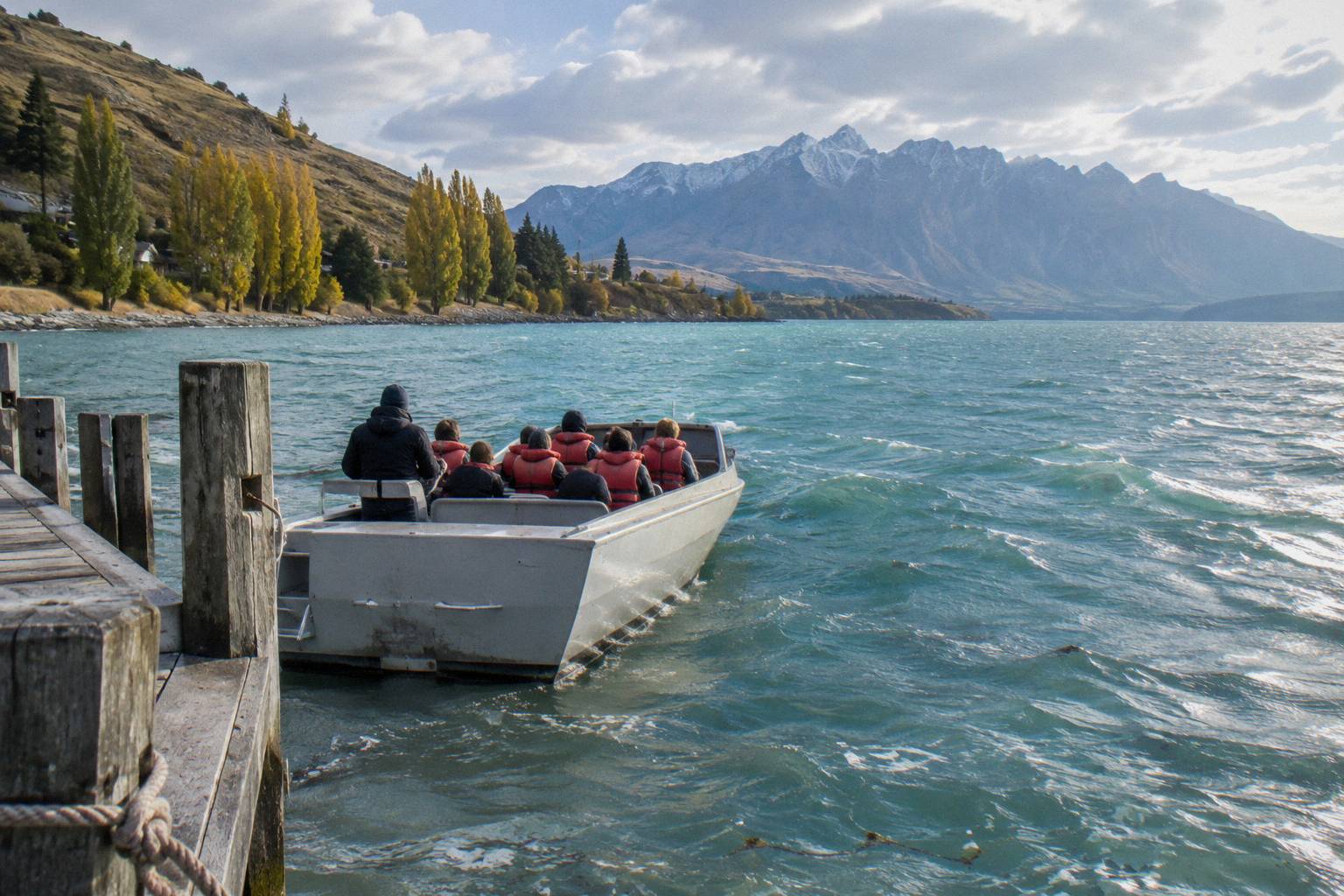
The passenger's own contribution is smaller but real. Every ride begins with a safety briefing, life vests are supplied on all five rides, and KJet's terms ask guests to hold the handrail and brace with their feet or bring a support person. The seating question matters too: KJet notes that centre seats are drier but that seating cannot be guaranteed. For the full licensing picture, including how the audits work, see our longer piece on jet boat safety rules and licences in Queenstown, and the rule itself on the Maritime NZ site.
It is also worth knowing what the safety net does not cover. Weather cancels trips: KJet says departures run 365 days a year weather permitting, and its terms allow the company to cancel or amend a trip for weather or unforeseen circumstances, offering a rebook or a full refund when it does. Cancellations you make yourself inside 24 hours of departure are non-refundable at management discretion, and no-shows lose the fare. So the licence and the audit keep the fast parts fast-but-safe, while the terms and conditions set the financial edges around your booking.
Is The Kawarau Built For Speed?
The Kawarau is the largest-volume river commercially rafted in New Zealand, about 60 km long from Lake Wakatipu via the Frankton Arm to Lake Dunstan, and its name is usually translated as "channel between rocks or shoals". Volume and a gravel channel are what make a river suitable for jet boats, which draw almost nothing and were invented for exactly this kind of shallow, fast water.
The engineering story explains the speed story. The Hamilton jet was invented by Sir William Hamilton in the mid-1950s, specifically for shallow rivers where a propeller would strike the bed. A jet boat draws its water from under the hull and expels it as a steerable jet, which is why the same craft can hold speed through water a conventional boat could not enter at all. The Kawarau's gravel banks and braided stretches are the habitat this machine was designed for, and the council's speed uplift on the middle river is, in effect, a legal acknowledgement that this is a river built for the format.
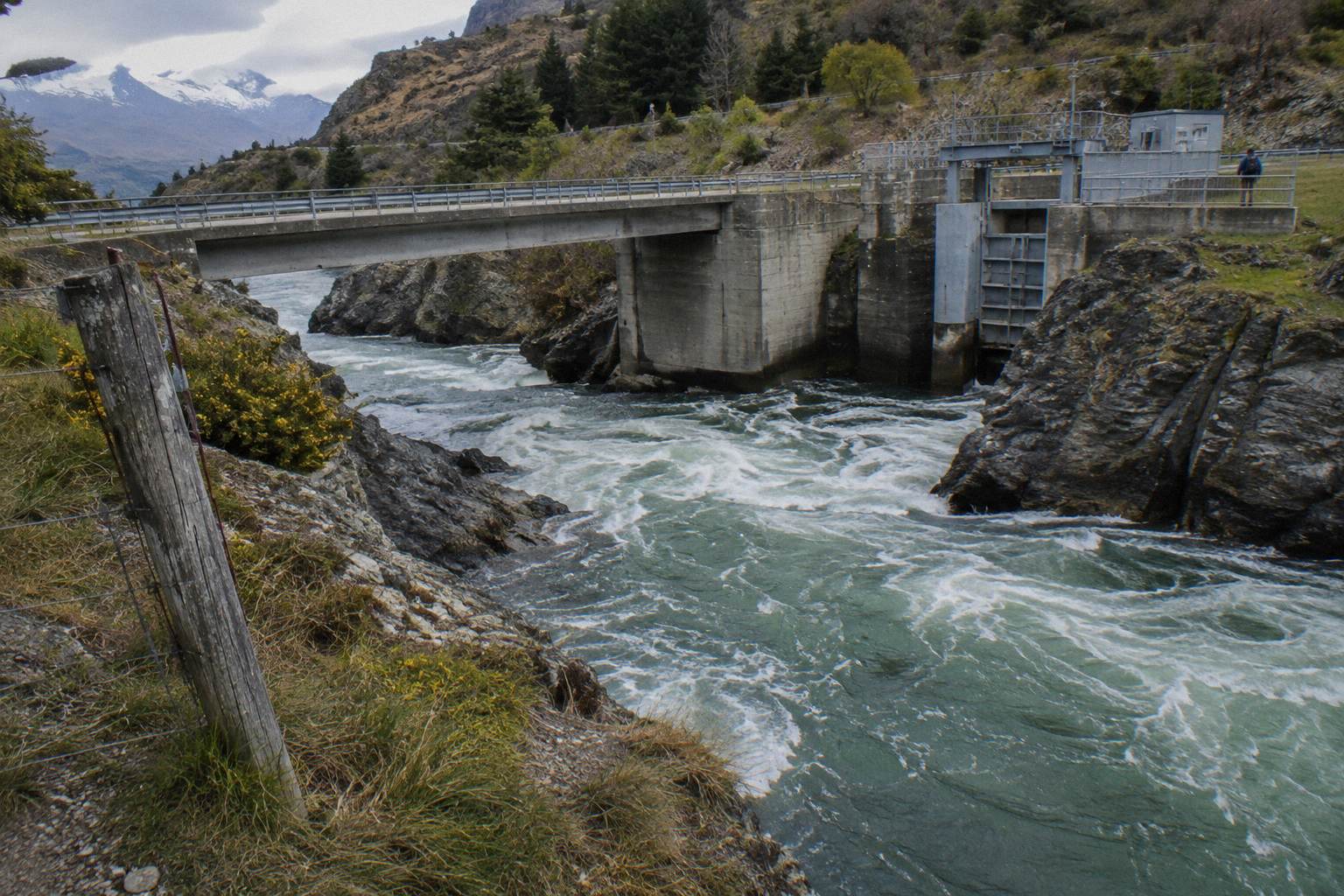
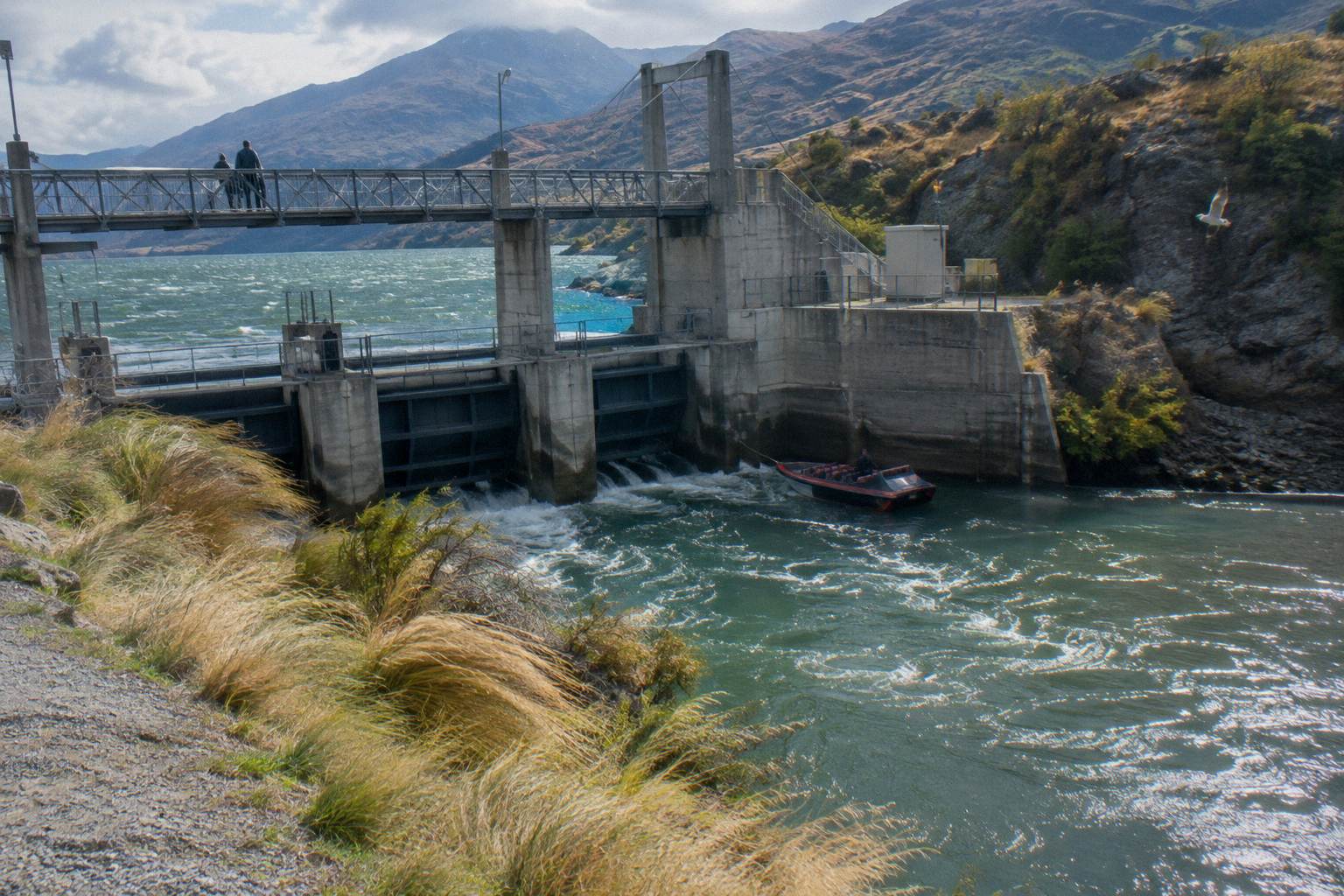
A few other facts about the river are worth having in your head as you ride. The control gates at the lake outlet, which regulate how much water leaves Lake Wakatipu into the Kawarau, were built in the 1920s and formed part of State Highway 6 until a replacement bridge opened in December 2017. The outlet falls carry the name Oterotu. Further down the gorge, the Kawarau Gorge Suspension Bridge stands 43 m above the river, was completed in late 1880, and is described by the bungy company that operates from it as the world's first commercial bungy jumping site.
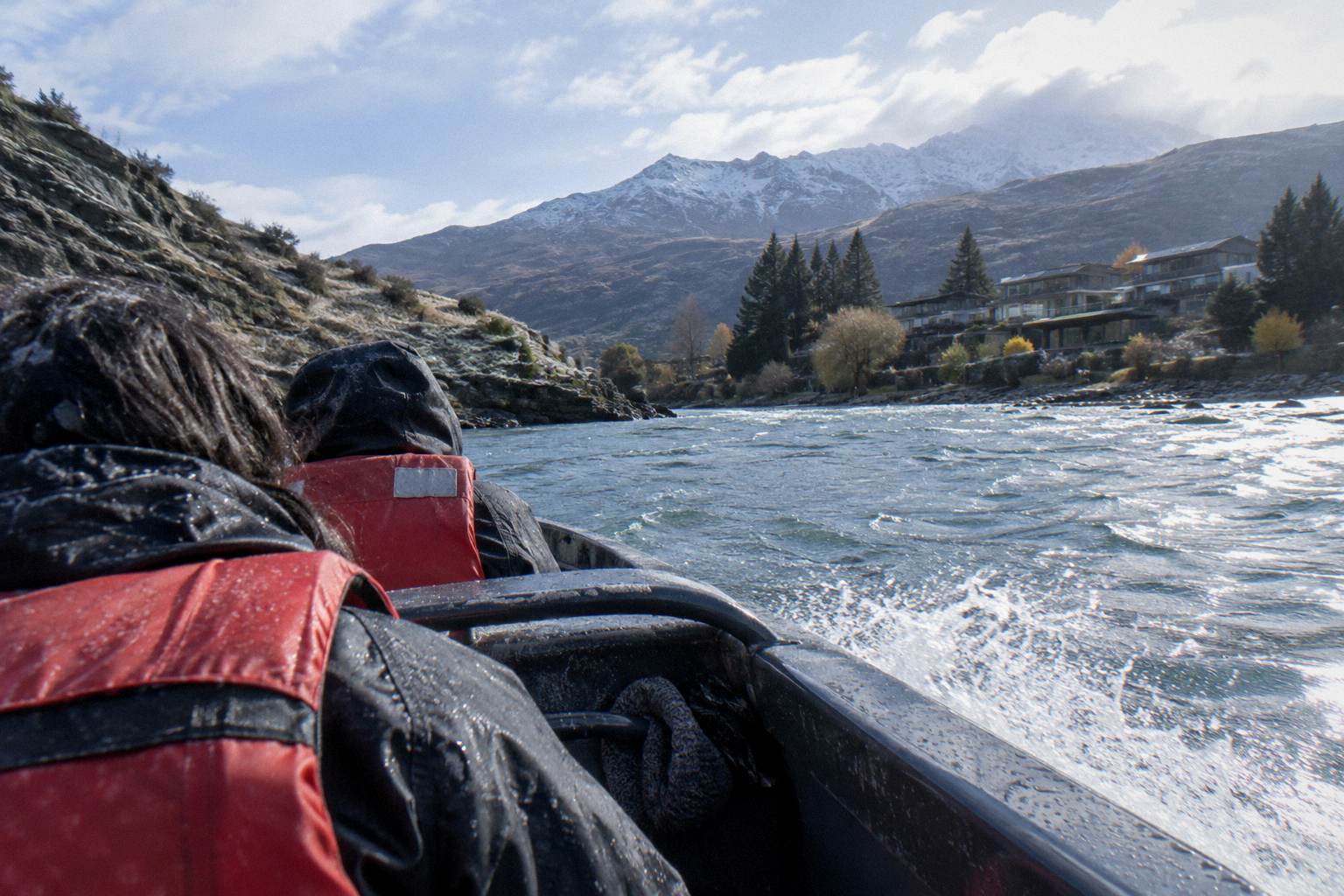
Depth is where the published detail runs out. How shallow the water is on the jet boat stretch, how deep the channels run, and how much spray a given seat takes at a given speed are all details the operator does not publish. The closest verified statement is indirect: KJet does not provide spray jackets, and tells riders to bring a waterproof jacket or buy an eco-poncho at the base, which tells you something about the expected wetness without a single number attached. If getting soaked is a worry, our piece on whether you get wet on a KJet ride covers what is known.
If your speed curiosity extends to a different river, the Shotover Jet Ride runs 25 minutes on the Shotover rather than the Kawarau, from NZ$199 per person, with a minimum height of 1.0 m that may rise to 1.2 m in high river conditions. Its route, canyon and pace are its own story, and it works better as an adjacent comparison than as a Kawarau ride.
Do Speed And Age Limits Interact?
No operator ties its age rules to speed, and each sets its own: KJet takes riders from age 2, with children 5 to 14 required to ride with an adult and infants 2 to 4 on a lap, while the RealNZ raft trip requires 13 and over and a weight range of 40 kg to 120 kg, and Shotover Jet uses a height rule instead of age. The bands differ by operator and are never interchangeable.
The pattern worth noticing is that the youngest-allowed rules cluster on the shorter, warmer, calmer products and tighten as the trip gets longer and rougher. KJet's hour on the lake and rivers accepts children from 2 with an adult, and its terms say staff at check-in decide whether a small child sits or rides on a lap. Thunder Jet's booking pages use the same starting age of 2, with infants on laps and children 5 to 14 accompanied. The RealNZ rafting day, nearly four and a half hours with a genuine river component, draws its line at 13 with a guardian for 13 to 15 year olds. None of this is explained by the boats going faster or slower: it reflects trip length, physical demands and time in cold water.
Body rules follow the same logic. KJet has no height or weight limit but requires every passenger to fit a life jacket, with sizes available to 4XL, and its booking page lists moderate fitness and excludes serious medical conditions. The raft trip's weight band exists for the raft and the wetsuits, not the jet leg. If you are planning a family trip and the age arithmetic is getting complicated, the detailed breakdown is in our guide to jet boat age rules for kids, which sets out each operator's bands side by side.
For adults with health questions, the answer is the same for every operator: ask before you book, and ask your doctor. The booking pages are specific, listing back problems, serious medical conditions and pregnancy as exclusions or non-recommendations across the products, but a webpage cannot assess an individual. Free cancellation up to 24 hours before departure applies to all five rides on their booking pages, so a question asked a few days early costs nothing to resolve.
Common Questions About How Fast A KJet Boat Goes
How Fast Does A KJet Boat Go?
KJet states its boats travel at up to 95 km/h. It is an operator figure, a top speed rather than a constant pace, and no other Queenstown jet boat operator publishes a comparable number.
Is 95 Km/H The Speed The Whole Ride Runs At?
No. It is a ceiling. Council rules cap all boats at 5 knots or below within 200 m of shore except where uplifted, so the pace rises and falls with each stretch of the lake and river, and with the driver's judgement on the day.
Do The Other Queenstown Jet Boats Go The Same Speed?
There is no verified figure for them. Thunder Jet, RealNZ and Shotover Jet publish no top speed, so any comparison you see elsewhere is a guess. Only durations and prices can be compared directly.
Does The Council Limit Jet Boat Speed On The Kawarau?
Yes and no. The national 5 knot nearshore rule applies to district rivers, but the Queenstown Lakes District Council uplifts it on the Kawarau from Lake Whakatipu to the Arrow River confluence all year, except one buoyed area near the Zoological Gardens.
Is The Speed Safe For Children?
KJet takes riders from age 2, with children 5 to 14 accompanied by an adult and infants 2 to 4 on a lap, and life vests are supplied. Age bands differ by operator, so check each booking page rather than assuming one rule covers every ride.
Who Checks That The Drivers Are Qualified To Go That Fast?
Under Maritime Rules Part 82, commercial river jet boat drivers must hold a New Zealand Commercial Jet Driver (River) Licence, Maritime NZ inspects boats and audits operations, and the operator certificate must be displayed prominently at the operation.
The speed number is the easy part of this question. The fuller answer is that Kawarau River Jet Boats run on a river whose speed limits are mapped by the council, whose drivers are licensed under national maritime rules, and whose one stated top speed belongs to a single operator. Book against the format you want: the hour-long KJet ride from NZ$159 per person, the shorter Thunder Jet option, or the RealNZ rafting day whose jet leg is the approach rather than the main event.