KJet Queenstown Photos And Video: Cameras, Phones And What You Can Bring On The Jet Boat
KJet's rules on cameras and phones are short and specific: gear must be stored while the boat is moving, hands-free mounted action cameras are the one exception, and selfie sticks are banned. Here is what that means in practice, what the booking page lists as an extra, and what to ask before you step on board.
Short answer
KJet states that a camera or phone must be stored while the boat is moving, hands-free mounted action cameras are allowed, and selfie sticks are not. The booking page lists photos and videos as an extra sold separately, with no price published. From NZ$159 per person for the 60-minute ride, free cancellation up to 24 hours.
KJet's photo and video policy is one of the most practical things to understand before a Queenstown jet boat ride, because it decides what you carry, what you stow and what you can actually film. The short version comes straight from the operator's FAQ: a camera or phone must be stored while the boat is moving, hands-free mounted action cameras are the only gear you can keep running, and selfie sticks are not allowed on board. Photos and videos also appear on the booking page as an extra sold separately, which makes them an add-on decision rather than something built into the fare.
That last point matters for planning. The ride itself, from NZ$159 per person for the KJet 60-Minute Jet Boat Ride, includes the boat, the driver and guide, life vests and a safety briefing. Images are listed alongside food, drinks, gratuities and hotel pickup as things the fare does not cover. No photo price is published, so work from a checklist angle: what to bring, what to leave behind, what the rules allow and what to ask the operator directly.
What Is The KJet Photo And Video Policy On The Boat?
KJet's stated policy is that a camera or phone must be stored while the boat is moving, that hands-free mounted action cameras are the only exception, and that selfie sticks are banned outright. There is no published route-length or boat-capacity detail attached to the rule, and no photo price appears anywhere on the booking page. Photos and videos are listed as an extra, sold separately from the fare.
The rule exists for an obvious reason. A jet boat that KJet states travels at up to 95 km/h changes direction hard and often, and a phone held in one hand becomes a projectile the moment the driver turns. Storing gear while the boat moves is a safety instruction, not a suggestion, and the crew will treat it that way. The practical consequence is that any footage you take yourself has to come from a mounted action camera, or from before the boat leaves the pier and after it returns.
The distinction between "hands-free mounted" and everything else is the part worth reading twice. A GoPro clipped to a chest harness or fixed to a helmet qualifies under the wording. A phone in one hand, a compact camera on a wrist strap or an action camera held at arm's length does not, because none of those are mounted. If your plan depends on a specific mount, it is worth confirming with KJet that your set-up counts before you travel.
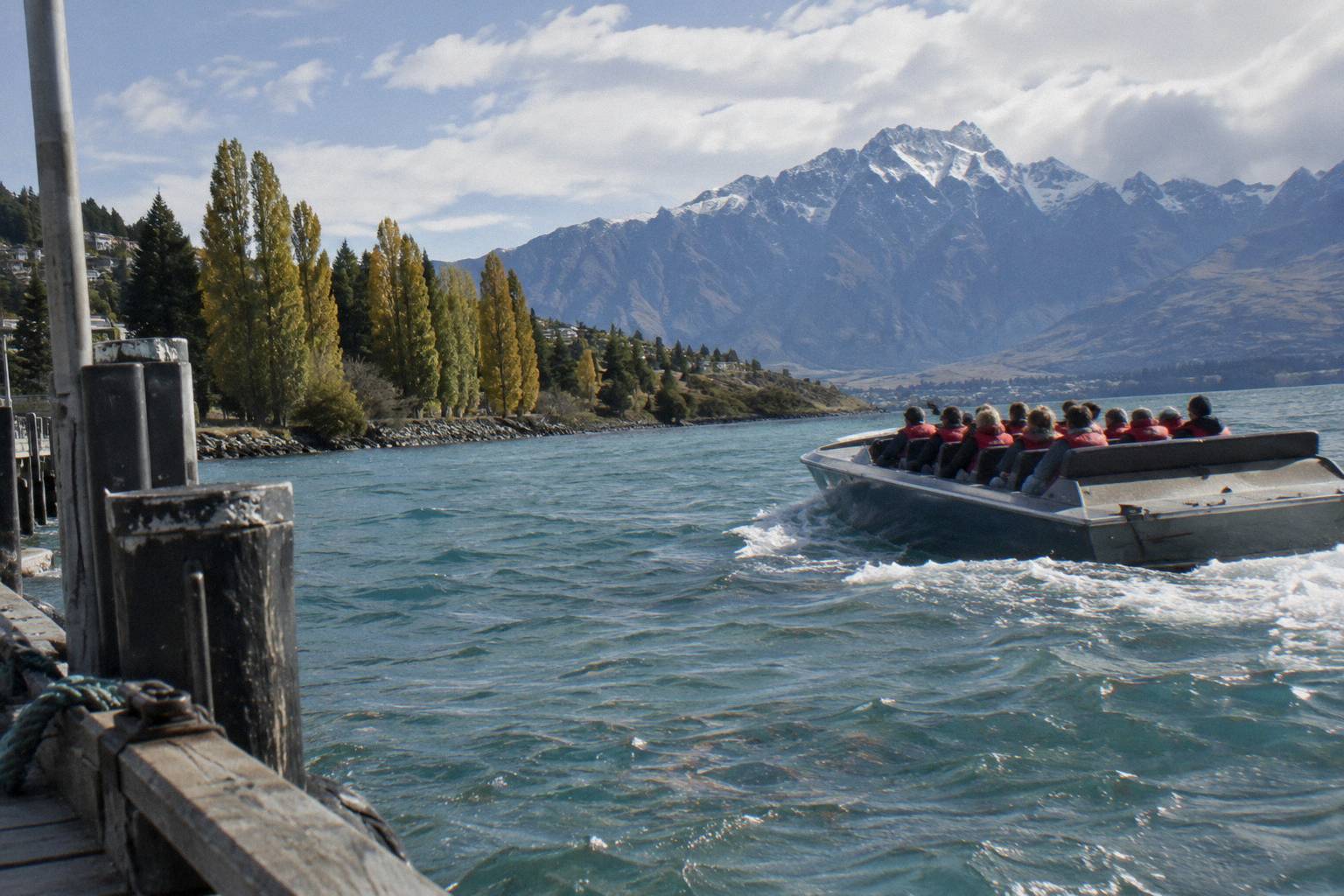
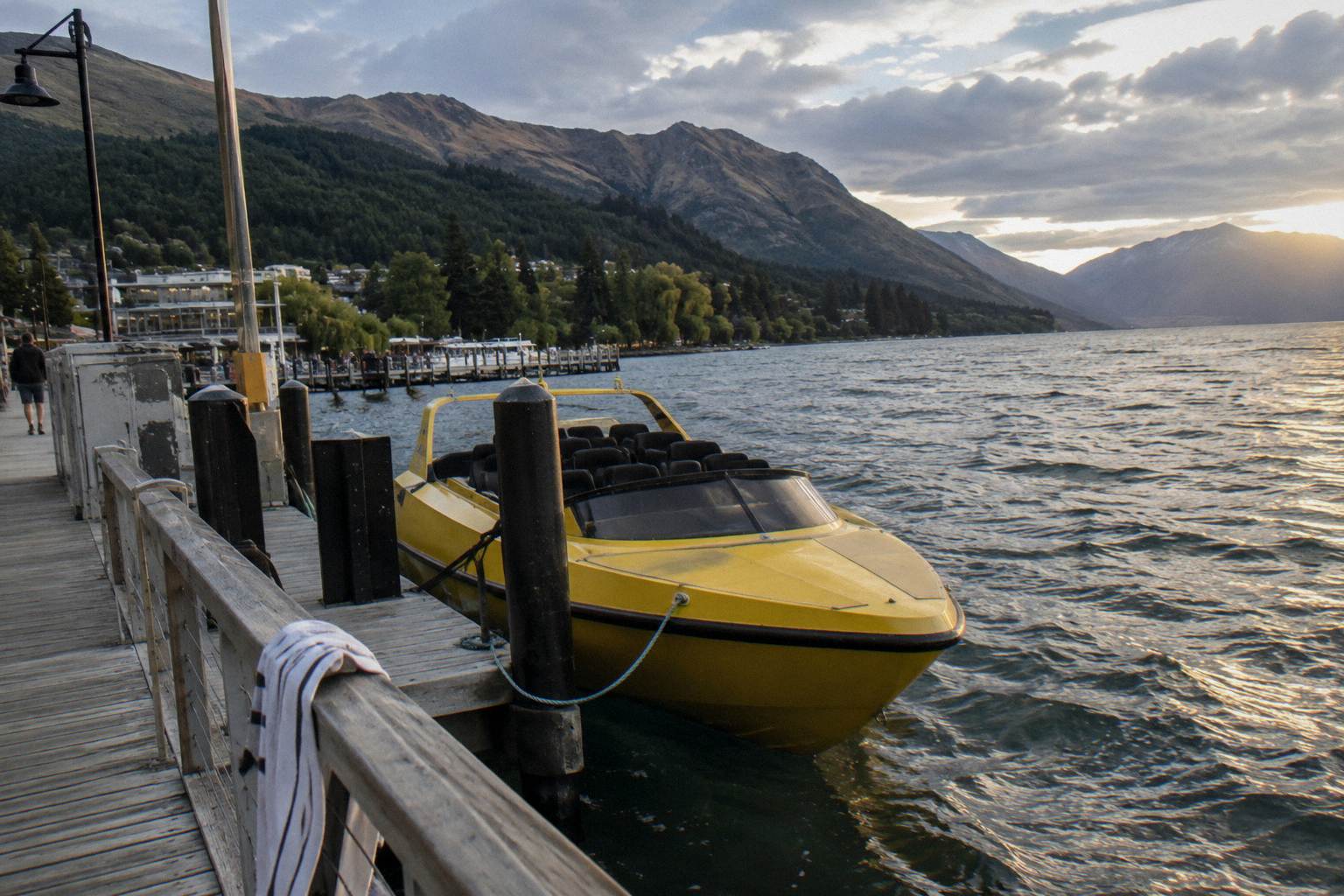
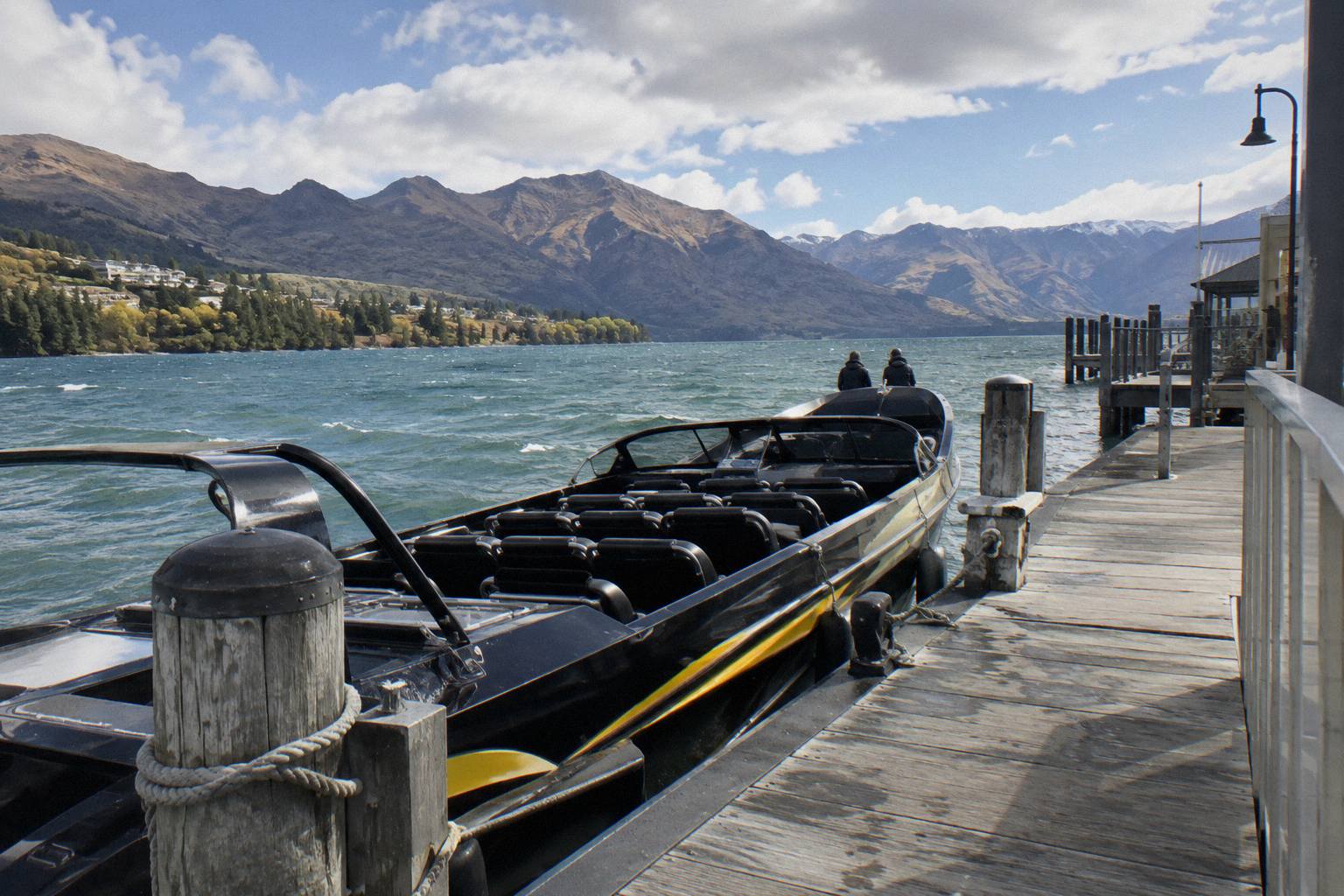
None of this stops you taking pictures on the pier. The Main Town Pier at Marine Parade, Queenstown Bay, is the meeting point, and there is time before boarding and after the ride for photos of the boat, the lake and the mountains. Riders who want a picture of themselves on a jet boat without buying an add-on often find the pier is where that picture happens.
Can You Bring A Phone Or Camera On A KJet Ride?
Yes, you can bring a phone or camera on board, but KJet's rule is that it must be stored while the boat is moving. That means a zipped pocket, a bag or whatever secure stowage the crew directs you to use. Bringing the device is not the problem, holding it up mid-ride is.
The word "stored" does the work in that policy. A phone loose in an open jacket pocket is not stored, and on a ride with spray and fast turns it is also a phone at risk. Zipped pockets, a secure day bag or a locker arrangement at the base are the realistic options. KJet does not publish a locker policy in the facts available here, so if you are travelling with a full camera bag rather than a single phone, ask the operator where it can go during the ride.
- Thunder Jet 30-Minute RideNZ$119
- KJet 60-Minute RideNZ$159
- Thunder Jet 1-Hour RideNZ$159
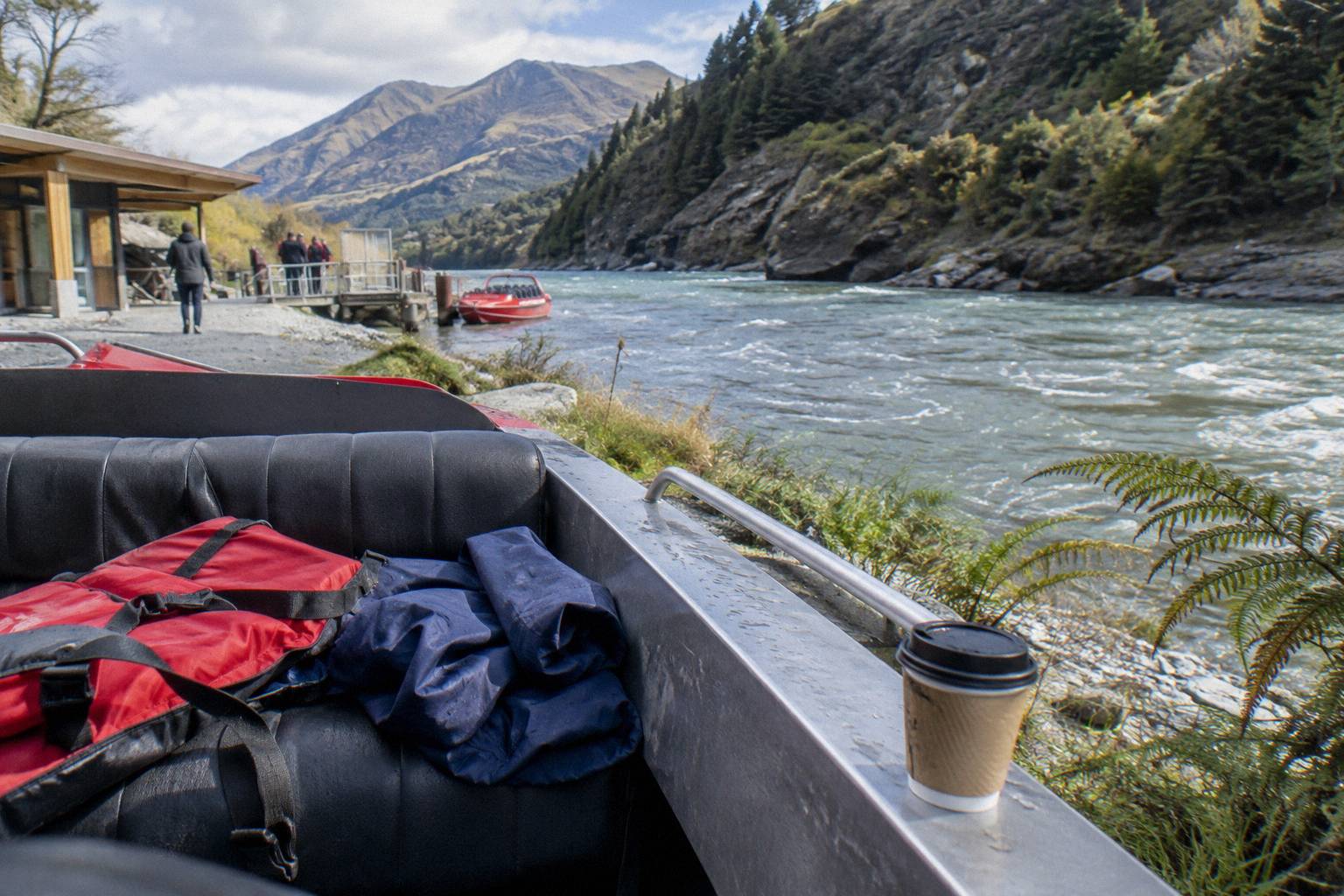
Water is the second half of the question. KJet does not provide spray jackets, and its FAQ advises bringing a waterproof jacket or buying an eco-poncho at the base. Life jackets are provided, and life jackets plus a waterproof layer are the standard answer to keeping the clothes underneath drier. No published fact says how wet any passenger gets, and the operator notes that centre seats are drier but that seating cannot be guaranteed. The same logic applies to gear: a phone in a zipped pocket under a waterproof jacket is better placed than one in a hand.
If phone photos are the whole point of the day for someone in your group, it is worth deciding before you ride who carries the phone and who just enjoys the hour. A rider who spends the whole trip worrying about a device in their pocket has, in effect, paid from NZ$159 per person to babysit a phone. The rider who stows it properly gets the full hour back.
The on-the-day photo decisions are one thing; the gear question is part of a wider packing job. Our guide on Kawarau River Jet Boats covers the rides themselves, and the detailed checklist in what to wear on a jet boat ride in Queenstown handles the clothing side in full.
Which Cameras Are Allowed And Which Are Banned?
Hands-free mounted action cameras are the only category KJet explicitly allows to run while the boat moves. Phones and cameras are permitted on board but must be stored. Selfie sticks are banned, full stop. Nothing in the published rules mentions tripods, gimbals or drones, so anything beyond the stated categories needs a direct answer from the operator.
The clean way to hold this in your head is three buckets: mounted and running, stored and safe, not on the boat at all. The table below fills those buckets using only what KJet states, with an "ask the operator" marker wherever no published rule exists.
| Gear | Status on the KJet ride | What the rule says |
|---|---|---|
| Phone | Allowed on board, stored while moving | Camera or phone must be stored while the boat is moving |
| Compact or mirrorless camera | Allowed on board, stored while moving | Same storage rule as phones |
| Hands-free mounted action camera | Allowed while moving | Only hands-free mounted action cameras may run |
| Action camera held in hand | Not allowed while moving | Held gear does not meet the mounted rule |
| Selfie stick | Banned | No selfie sticks |
| Tripod, gimbal, drone | Not covered by published rules | Ask the operator before you bring it |
The mount question deserves a practical note. Chest harnesses and helmet mounts are the two common answers for jet boating, because both keep the camera attached to you rather than to the boat, and both leave your hands free for the handrail. KJet's FAQ tells guests to hold the handrail and brace with their feet, which is a strong hint about where your hands belong for the hour.
Drones are the clearest "ask first" case. Queenstown's airspace, the lakefront location and maritime rules can all apply, and none of that is covered by the KJet FAQ wording. The Civil Aviation Authority governs drone use in New Zealand, but rather than assume, put the question to KJet directly and check the local rules yourself before packing one.
For riders who want the spins on film, there is a second angle worth knowing: which rides list 360 degree spins at all. Thunder Jet's booking pages list full 360 degree spins among the inclusions, while KJet's booking page does not list a spin. That comparison lives in which jet boat rides list 360 spins, and it matters if footage of a full spin is the specific shot you are after.
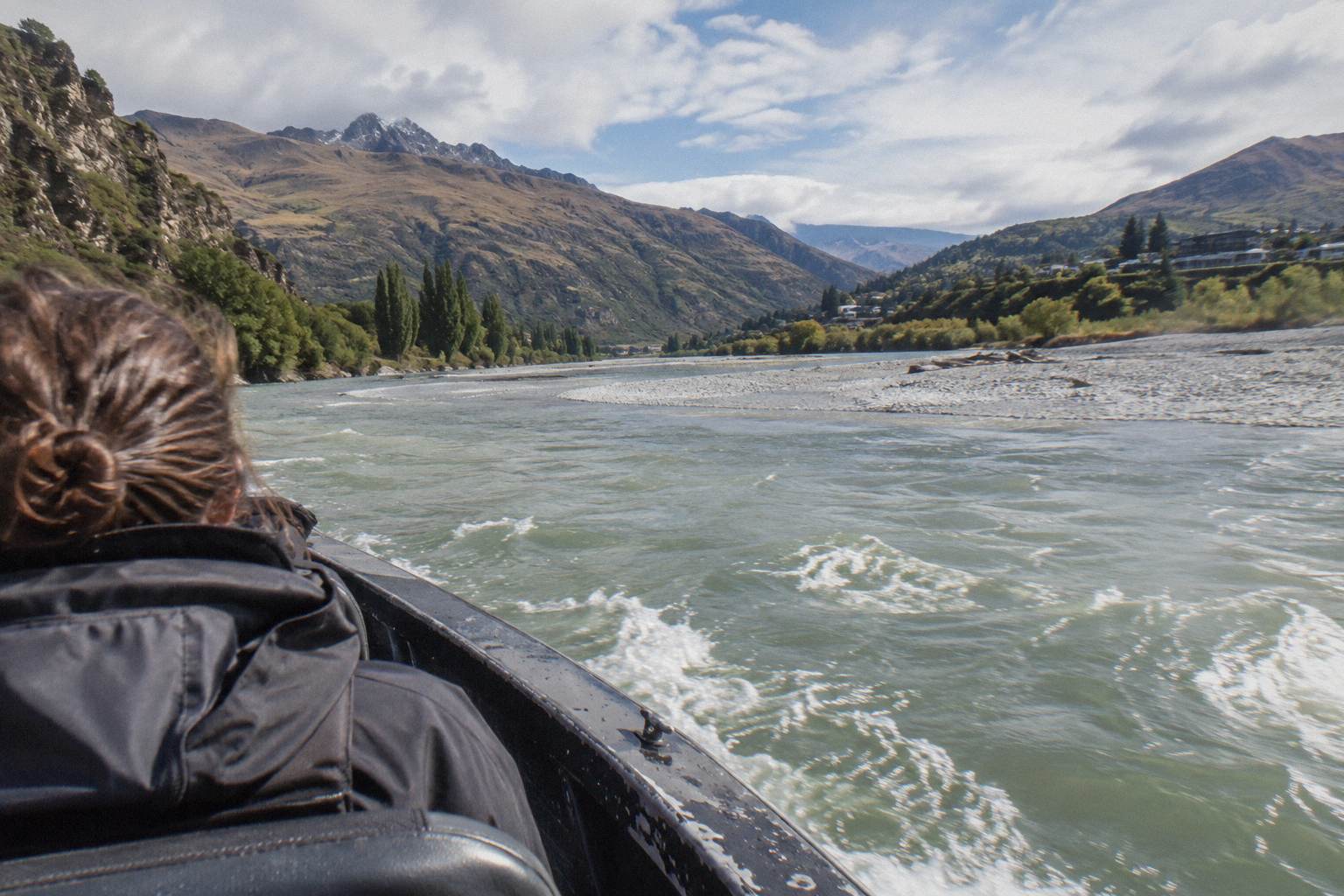
The Thunder Jet 30-Minute Jet Boat Ride is the short-format option from Steamer Wharf, from NZ$119 per person and rated 4.7 from 27 reviews, a small pool best read alongside its count. If a mounted camera and a listed spin sound like your footage plan, it belongs on your shortlist.
Do The Photos Cost Extra On The KJet Booking Page?
Yes. The KJet booking page lists photos and videos among the extras not included in the fare, alongside food and drinks, gratuities and hotel pickup. No price is published for the photo product, and nothing in the available facts promises that photos are taken on every departure. Treat it as an add-on decision made at booking, not a built-in part of the ride.
The exclusion list is worth reading in full, because it draws the boundary of what from NZ$159 per person actually buys: the 60-minute jet boat ride, a driver and guide, life vests and a safety briefing. Everything else on the extras list is yours to arrange. That structure is normal for Queenstown jet boating, and it is better to know it at the point of booking than at the pier.
Because no price and no product detail are published, no guess is made at either. What can be said plainly is the decision shape: you either bring your own mounted action camera and film the ride yourself, or you look at what the operator sells and decide whether it is worth it to you. Some riders do both, some do neither, and neither choice affects the ride itself.
Timing matters for the add-on route. If photos are sold at the base or at booking, the decision point is before you board, not after, when the boat has already done its hour. Asking at check-in, when staff are handing out life jackets and running the briefing, is the last clean moment to decide. That is also the moment staff decide whether a young child sits or rides on a lap, so it is a busy few minutes worth arriving early for.
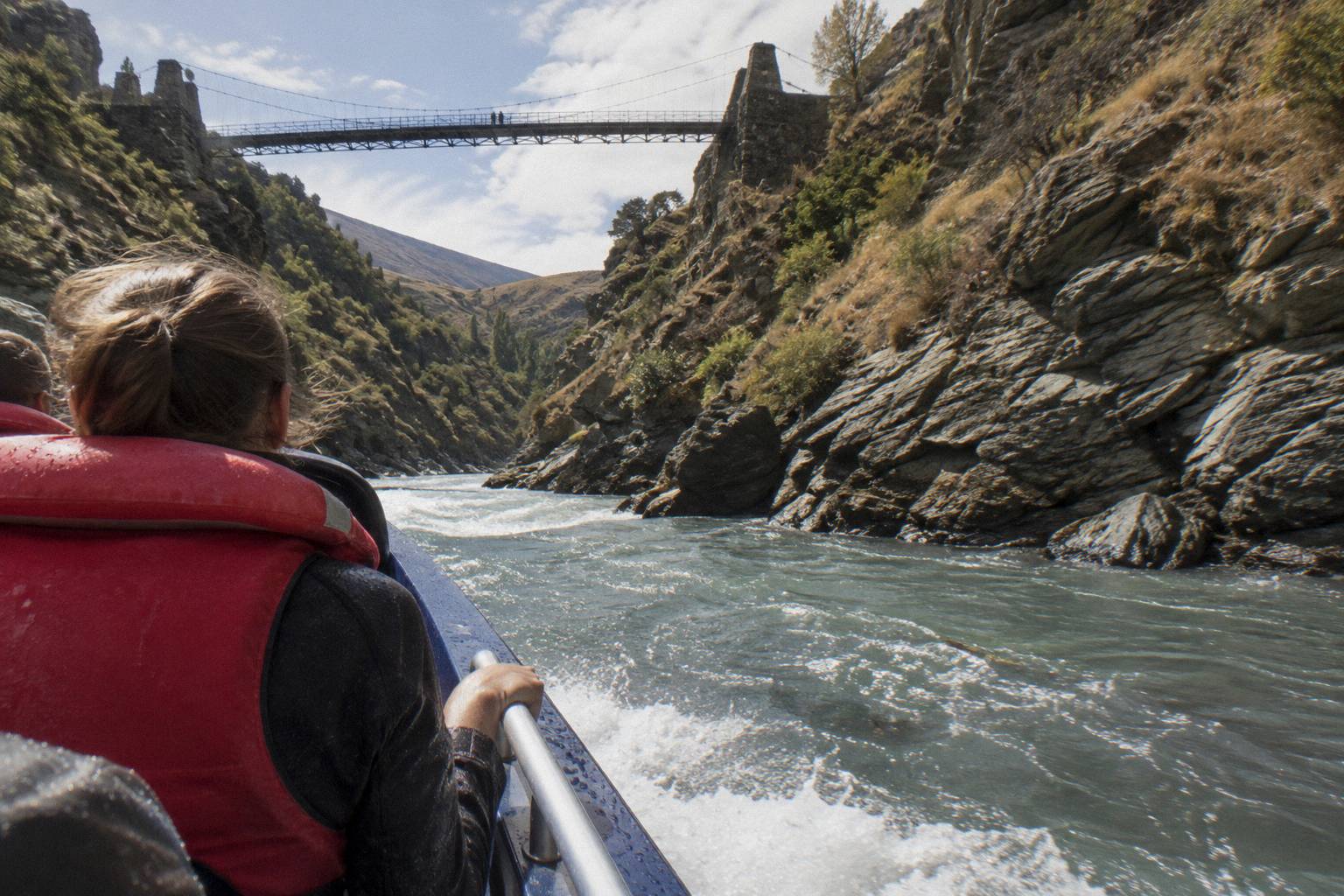
KJet's own site carries the definitive wording on gear and stowage, and it is the right place to confirm anything that has changed: KJet's FAQ and ride information.
The KJet 60-Minute Jet Boat Ride is rated 4.7 from 628 reviews, and it runs from the Main Town Pier every hour on the hour from 10am to 6pm, 365 days a year, weather permitting, per KJet. Check availability on the KJet 60-Minute Jet Boat Ride tour page, or check availability directly if the hour and the add-on decisions are already settled.
What Should You Wear And Bring To Protect Your Gear?
KJet's wear-and-bring advice is a waterproof jacket because spray jackets are not provided, closed shoes, sunscreen, and sunglasses or goggles and a hat and gloves in winter. Life jackets are supplied, sized to 4XL. None of this is camera equipment, but every item on the list is what keeps a stored phone or camera survivable for the hour.
The clothing list and the gear list are really one list. A zipped waterproof jacket protects your body and the phone in its inner pocket at the same time. Closed shoes keep your footing during boarding, when hands and bags are busiest. Winter handrails are heated, per the FAQ's winter answer, which tells you cold hands are a real enough factor that the operator engineered for it. A rider in gloves with a chest-mounted action camera has solved the filming problem and the comfort problem in one purchase.
The eco-poncho option at the base is the fallback if you arrive without a waterproof layer. It is the operator's own answer to the no-spray-jackets policy, and for camera carriers it does the same job as a jacket: it keeps the spray off the layers where your stored gear sits. Whether buying one beats bringing your own is a cost decision made at the pier, and no price for the poncho is published here, so ask at the base.
| Item | KJet's position | Camera-carrying angle |
|---|---|---|
| Life jacket | Provided, sizes to 4XL | Must fit over your jacket and any chest mount |
| Waterproof jacket | Bring your own, not provided | Best place for a stored phone |
| Eco-poncho | Sold at the base | Fallback waterproof layer |
| Sunglasses or goggles | Winter advice | Keeps eyes clear for filming |
| Hat and gloves | Winter advice | Gloves matter for mounted-camera set-up |
| Closed shoes | Standard advice | Frees your hands during boarding |
| Sunscreen | Standard advice | An hour on the water still burns |
There is an age-and-body dimension to the gear day too, briefly. Children 5 to 14 must ride with an adult, infants 2 to 4 ride free on a lap with one adult per infant, and under 2s cannot ride. A parent managing a lap infant has exactly zero spare hands for a phone, which is one more argument for the mounted-camera route on family rides. The full rules are in jet boat rides with kids: age rules.
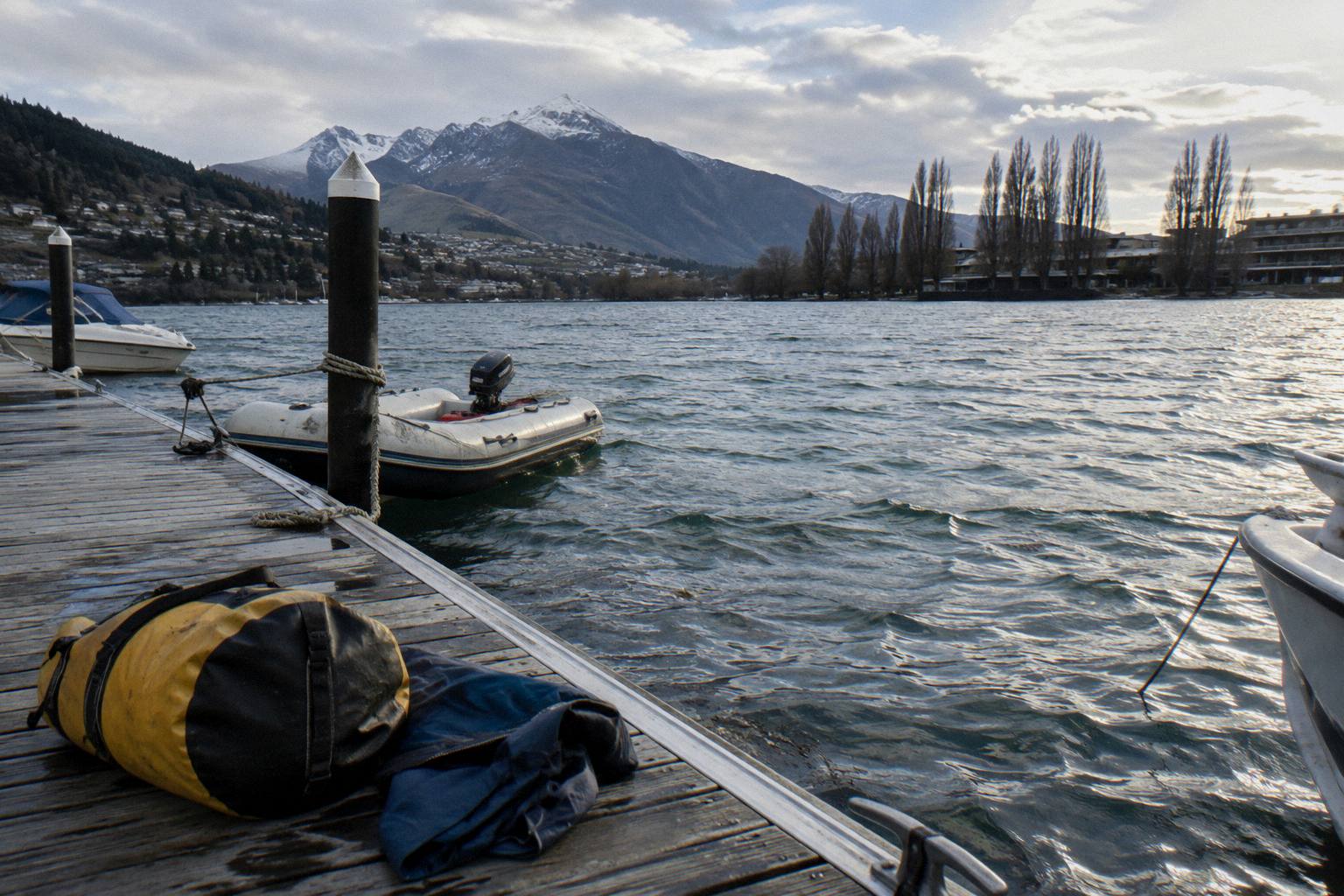
How Do The Rules Compare Across The Queenstown Rides?
The camera rules printed in the verified facts apply to KJet: stored while moving, mounted action cameras only, no selfie sticks. For the Thunder Jet rides, the RealNZ raft trip and the Shotover Jet ride, no comparable camera wording is published, so the plain answer is to ask each operator. What can be compared on paper is duration, price and what the booking pages include.
Comparison on camera policy would be guesswork beyond KJet, so this table compares what is actually stated: the format and the fare. All five rides carry free cancellation up to 24 hours on the booking page. Prices are per person in New Zealand dollars.
| Ride | Duration | From price | Photos on the booking page | Camera rules published |
|---|---|---|---|---|
| KJet 60-Minute Jet Boat Ride | 1 hour | NZ$159 | Listed as an extra, no price | Yes: stored while moving, mounted action cameras only |
| Thunder Jet 30-Minute Jet Boat Ride | 30 minutes | NZ$119 | Ask the operator | Ask the operator |
| Thunder Jet 1-Hour Jet Boat Ride | 1 hour | NZ$159 | Ask the operator | Ask the operator |
| RealNZ Kawarau Rafting And Jet Boat Trip | 4 hours 30 minutes | NZ$329 | Ask the operator | Ask the operator |
| Shotover Jet Ride | 25 minutes | NZ$199 | Ask the operator | Ask the operator |
Two structural points help that table make sense. Thunder Jet runs both Thunder Jet rides from one base, the Watersport kiosk on Steamer Wharf, and they are two lengths of one product family rather than separate offers. The RealNZ trip is a raft-led day: the jet boat leg of about 25 minutes is the transfer to the rafting put-in, followed by about an hour of rafting, all inside roughly 4.5 hours. Camera logic differs on a raft, where a guide typically handles stowage, but that is exactly the kind of detail to confirm with RealNZ rather than assume.
The Shotover Jet Ride is on the Shotover River, not the Kawarau, and appears here as an adjacent format for comparison. Its minimum height is 1.0 m, which may rise to 1.2 m in high river conditions, and children need a fare-paying adult. The deeper comparison of the two rivers and two ride styles lives in KJet versus Shotover Jet: which to book.
The RealNZ Kawarau Rafting And Jet Boat Trip, from NZ$329 per person and rated 4.9 from 184 reviews, is the long-day option where photo logistics are a different conversation entirely: wetsuits, rafting equipment, hot showers and a round-trip transfer are included. If a half-day of water time with more filming variety appeals, check its live listing.
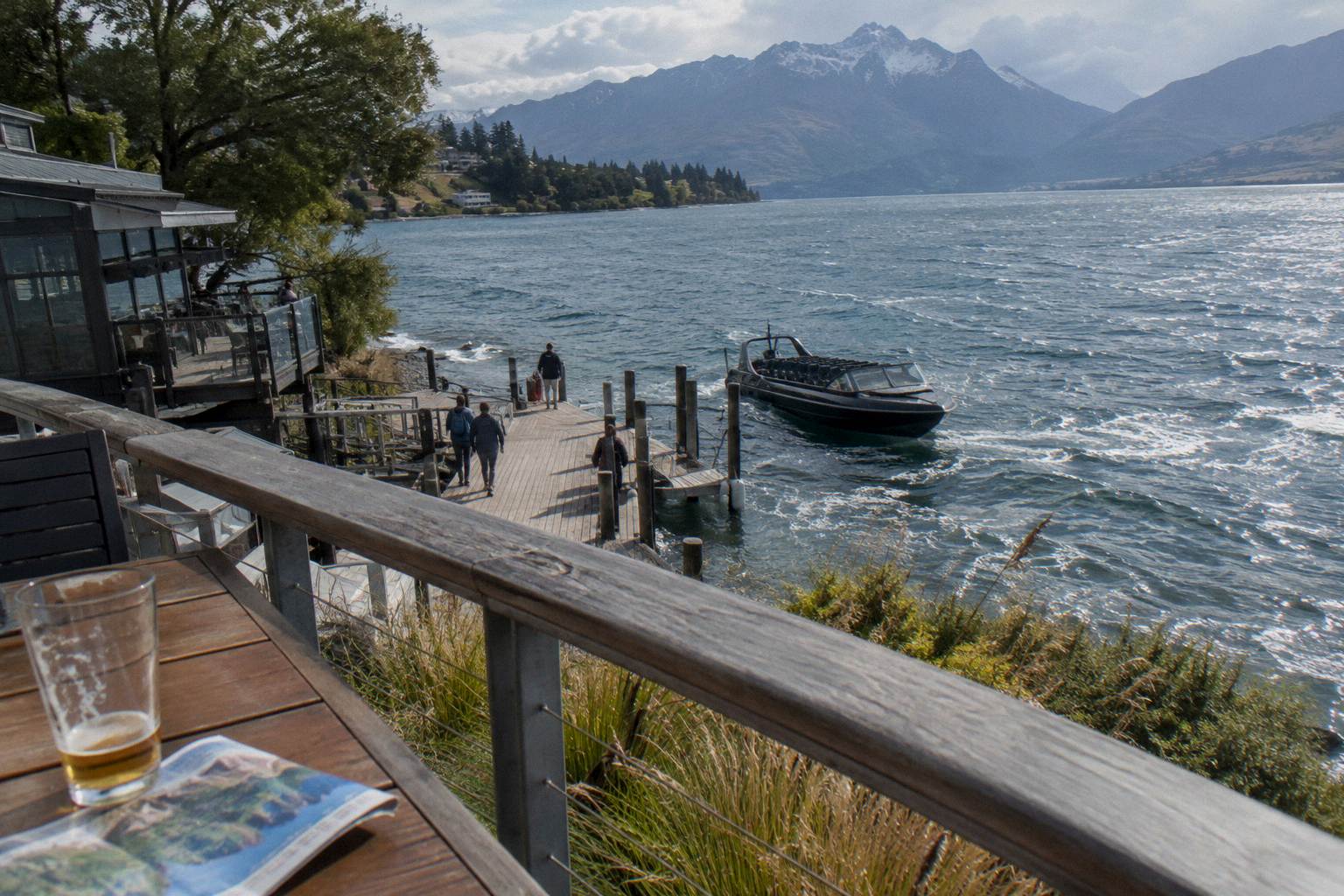
What Should You Ask KJet Before Your Ride?
Four questions cover almost everything that published facts cannot answer: what the photo product costs and how it is delivered, whether your specific mount counts as hands-free, where bags and larger cameras can be stored, and whether anything about the day, from minimum numbers to weather, might change your departure. Each one has a clean answer from the operator and no published answer here.
The ask-list is deliberately short, because these are the gaps that matter and no others. Everything else is already settled by KJet's own wording. Safety oversight is one thing you do not need to ask about in the same breath: under Maritime Rules Part 82, commercial river jet boat drivers must hold a New Zealand Commercial Jet Driver (River) Licence, Maritime NZ inspects boats and audits operations, and an operator certificate must be displayed prominently, as the Maritime NZ rules page sets out.
| Question to ask | Why it matters | Who to ask |
|---|---|---|
| What does the photo package cost and how is it delivered? | Listed as an extra, no price published | KJet, at booking or check-in |
| Does my mount count as hands-free? | The mounted rule is the only way to film while moving | KJet before you travel |
| Where can I store a bag or large camera? | Stored while moving applies to everything | KJet at check-in |
| Can I bring a tripod or drone? | Not covered by published rules | KJet, plus airspace rules for drones |
| Are there minimum numbers on my departure? | Trips need minimum numbers per KJet's terms | KJet when booking |
Weather and cancellation are worth one more sentence. KJet may cancel or amend a trip for weather or unforeseen circumstances, and then offers a rebook or a full refund; cancellations within 24 hours of departure are non-refundable at management discretion. The booking page separately offers free cancellation up to 24 hours. If photo conditions matter to you, the 24-hour mark is your decision window, and the detail behind it is in when weather cancels a KJet ride.
Common Questions About KJet Photos And Video
Can You Take Your Phone On A KJet Ride?
Yes, but KJet's rule is that a camera or phone must be stored while the boat is moving. A zipped pocket under a waterproof jacket is the practical answer, since spray jackets are not provided and life jackets are.
Can You Film On A KJet Jet Boat?
Only with a hands-free mounted action camera while the boat is moving. Held cameras and phones must be stored, and selfie sticks are not allowed on board.
Are KJet Photos Included In The Ticket Price?
No. The booking page lists photos and videos as an extra sold separately, alongside food and drinks, gratuities and hotel pickup. The fare covers the ride, the driver and guide, life vests and the safety briefing. No photo price is published, so ask the operator.
Are Selfie Sticks Allowed On The Jet Boat?
No. KJet's FAQ states plainly that selfie sticks are not permitted, and the storage rule for phones applies for the whole time the boat is moving.
What Camera Gear Can You Bring On A KJet Ride?
Phones, compact cameras and action cameras may all come on board, but only hands-free mounted action cameras may run while the boat moves. Everything else must be stored. For mounts, tripods or drones, confirm your specific set-up with KJet before you travel.
Where Can You Leave A Bag During The Ride?
No locker or bag-storage policy is published in the verified facts. Ask KJet at check-in where bags and larger cameras can go, and arrive early enough to sort it before the safety briefing.
Three formats cover most riders' plans, whichever way the camera decision lands: